Choosing an Offshore Fishfinder/Chartplotter: An IT Guy's Honest Guide
I work in networking and server administration for a living, and marine electronics marketing drives me up a wall. Half the spec sheet is real and half is branding. This guide covers what actually matters when you’re speccing a fishfinder/chartplotter combo for offshore use — trolling the canyons and finding bottom structure — and what you can safely ignore.
The transducer matters more than the head unit
The screen is a computer; the transducer is the sensor, and the sensor is your ceiling. A $3,000 display with a $200 transom-mount transducer is a Ferrari on bicycle tires.
For mid-Atlantic offshore work you want:
- 1kW minimum transducer power for reliable bottom reading past 300 feet. The 600W units that ship “in the box” run out of breath right where tilefish live.
- Low-frequency CHIRP (roughly 38–75 kHz) for deep water; medium/high CHIRP for the inshore wrecks. A dual-channel transducer covers both.
- Through-hull or in-hull mounting over transom mount for anything with deadrise running offshore speeds — transom units aerate and go blind in a chop.
If you’ve settled on Garmin, the full transducer buying guide breaks down the GT-series naming, which chartplotter tiers can actually run Panoptix LiveScope, and how to match power/frequency to your depths.
What CHIRP actually is
Traditional sounders ping one frequency. CHIRP sweeps a range of frequencies per pulse, which means better target separation (two tuna instead of one blob) and cleaner returns in deep water. It’s not marketing — it’s the one technology jump of the last fifteen years that’s worth paying for. Every major brand has it; the difference is transducer quality and processing.
NMEA 2000: the boat network
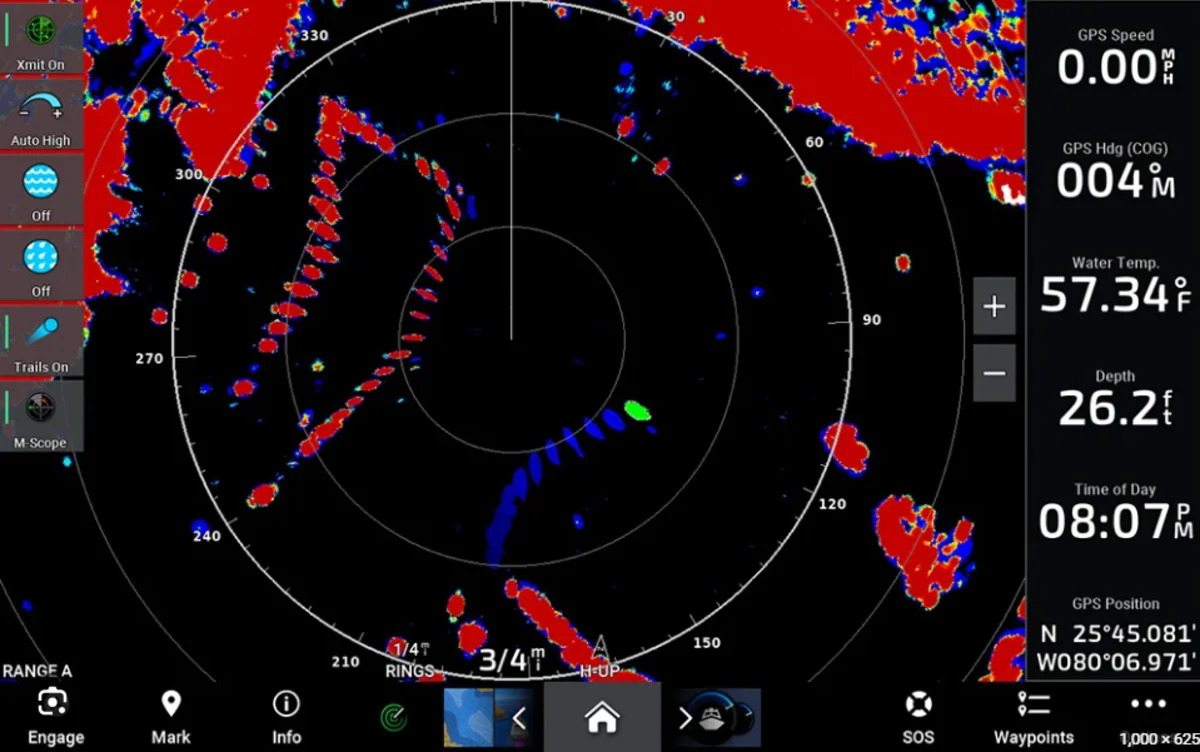
Modern units talk over NMEA 2000 — a CAN-bus network, for the technically inclined. Practically, it means your GPS, sounder, radar, VHF (with DSC), engine data, and autopilot share one backbone. Two pieces of advice from someone who networks things professionally: buy everything on the same backbone standard and skip proprietary adapter chains where possible, and label your drops — future you, troubleshooting a dead wind sensor in a following sea, will be grateful. Radar and high-bandwidth sonar imaging actually ride on a separate, faster Ethernet layer on top of that NMEA 2000 backbone rather than the backbone itself — the full breakdown of how NMEA 0183, NMEA 2000, and that Ethernet layer fit together, plus dedicated setup guides for each, is in the boat networking overview.
Screen size: buy the biggest you can mount and afford
Nobody has ever complained their offshore display is too big. Split-screen chart/sonar is the standard offshore view, and on a 7-inch screen each half is a phone screen in glare and spray. 9 inches is the practical floor offshore; 12 is comfortable.
Picking a series within a brand
Once you’ve settled on a brand, most of them split into a few product families by capability and price — Garmin’s, for instance, breaks down into STRIKER, ECHOMAP, and GPSMAP, each aimed at a different boat and budget, with a full model-by-model comparison inside each family.
Where the brands actually differ
Garmin, Simrad, Furuno, and Raymarine all make competent hardware in 2026. Real differences: chart ecosystems and their subscription models, user interface (touch-only is miserable in a seaway — get buttons or a hybrid), sonar processing at depth (Furuno’s reputation with commercial guys exists for a reason), and radar integration if you run canyons overnight.
What’s at my helm
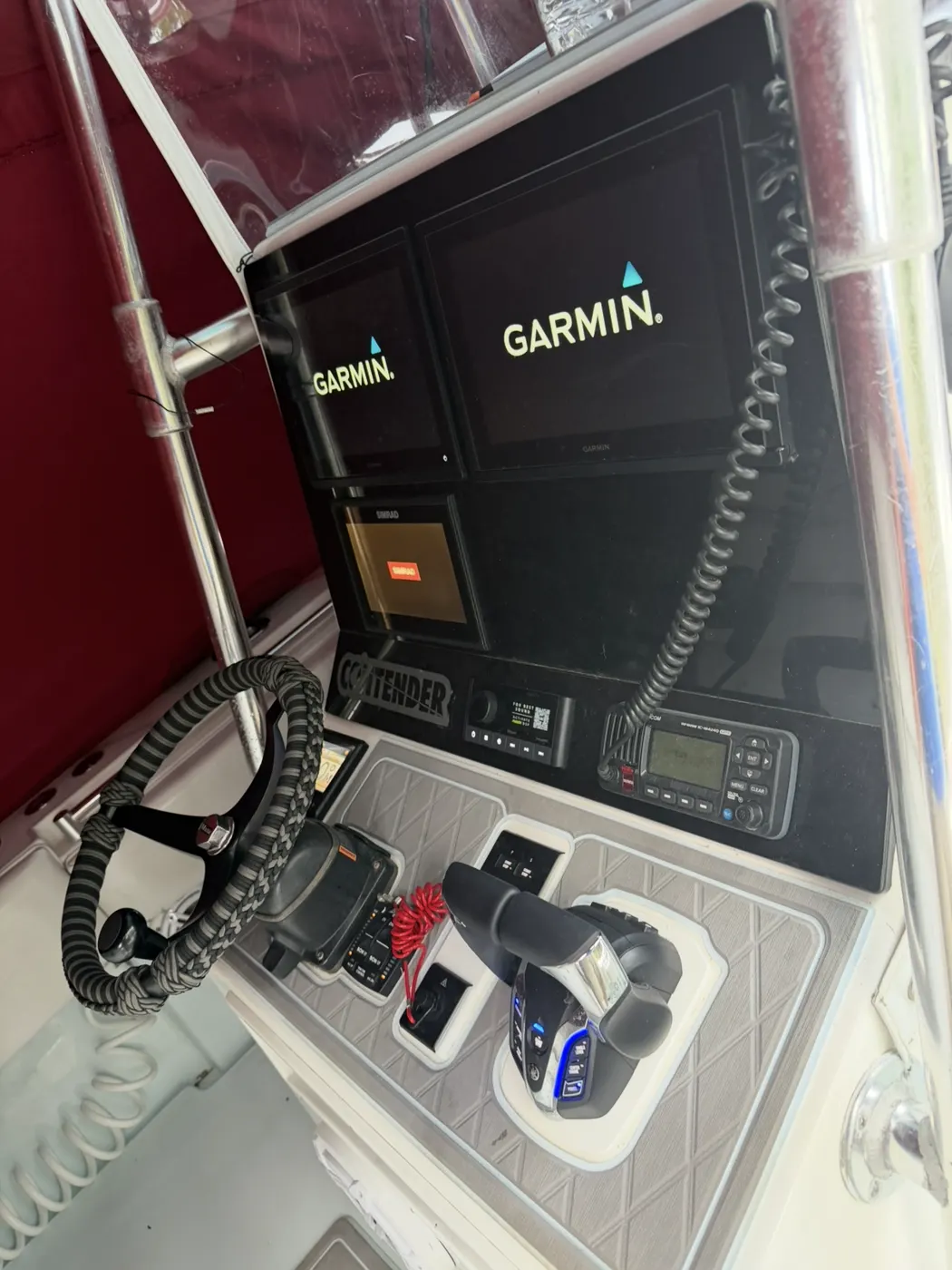
I run two Garmin 1243xsv units alongside a Simrad GO9. The Simrad is there for engine data, but it earns its dash space by running CMOR mapping chips — some of the best bottom detail available for our waters. The sleeper feature of the Garmin ecosystem is its integration with the Force Kraken trolling motor: spot-lock over a piece of structure for bottom fishing, or controlled drifts across it, without touching the anchor. Once you’ve fished structure that way, you won’t go back.
Sensible configurations
- Wreck and lump fishing, occasional 30-fathom trips: 9” combo unit, 600
This article may contain affiliate links. If you buy through them, we may earn a small commission at no extra cost to you. Learn more.