Offshore Trolling Reel Buyer's Guide: 30s, 50s, and Lever Drag
Trolling reels are where offshore budgets go to die — you need six or more of them, and the price spread between “budget” and “bluewater standard” is a thousand dollars a rod. Here’s how to think about the decision before we get into specific models in future reviews.
Size classes, translated
Reel sizes (30, 50, 80) date back to line-class fishing. For practical mid-Atlantic purposes:
| Class | Typical use | Line (with braid backing) |
|---|---|---|
| 16–20 | School bluefin/yellowfin on light spreads, mahi | 30–50 lb |
| 30 | The mid-Atlantic yellowfin workhorse | 50–65 lb |
| 50 | Heavier yellowfin, bigeye insurance, wahoo | 65–80 lb |
| 80 | Serious bigeye/bluefin, giant grounds | 100 lb+ |
A spread of 30s with a pair of 50s covers most mid-Atlantic canyon trolling. Buy the 80s when your fishing actually demands them.
Lever drag vs. star drag
For trolling, lever drag wins and it isn’t close. You can preset strike drag, see at a glance what every reel is set to, and push smoothly to full without guessing. Star drags belong on bottom and jigging outfits. The trolling exception: none worth arguing about.
Two-speed: yes, for anything 50-class and up
Low gear feels like a gimmick until you’re forty minutes into a bigeye standing straight up and down. On 30s it’s a nice-to-have; from 50 up it’s the difference between finishing a fight and losing it at color.
Where cheap reels fail
Budget trolling reels have gotten legitimately good on paper. Where they still fail: drag smoothness at the top of the range (a drag that’s smooth at 8 lb and grabby at 18 lb costs you fish), corrosion resistance in the guts after two seasons of spray, and frame flex under max drag that binds the spool. You find out about all three at the worst possible moment. This is the category where “buy once, cry once” is usually right — a quality 30 outlasts three cheap ones.
What I actually run
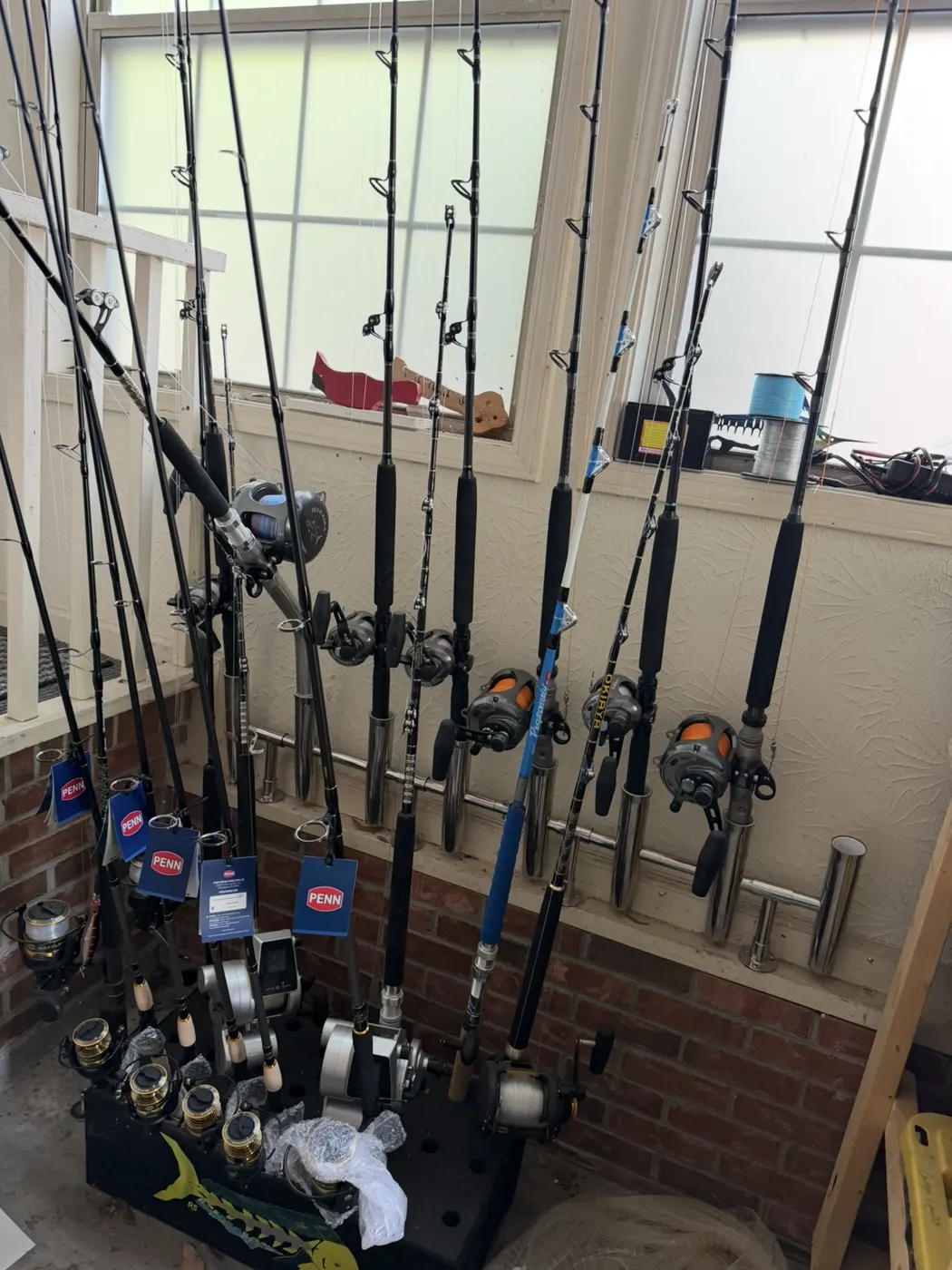
I’ve been through several brands and reel types over the years. The current spread: Okuma Makaira 50s and 80s for high-speed and planer work, Okuma Alijos for dead-bait trolling, a Penn Fathom Electric 80 on the long line and teasers, and Penn spinning gear rounding it out.
Line capacity math
Hollow-core or solid braid backing with a mono top shot has become standard: a 30-class reel holding 400+ yards of 80 lb braid under 100 yards of 60 lb mono gives you capacity a straight-mono 50 can’t match, in a lighter package. If a reel’s spec sheet only quotes mono capacity, do the braid math before deciding it’s too small.
What’s next
Individual, hands-on review articles fo
This article may contain affiliate links. If you buy through them, we may earn a small commission at no extra cost to you. Learn more.