East Coast Fish Names and Nicknames: Pelagics vs. Bottom Fish
Every boat has its own slang, but a few things hold true up and down the coast: nobody says “Coryphaena hippurus” at the dock, plenty of fish share the same nickname, and the official name is the one that actually matters the moment a regulation, a size limit, or a tournament rule is on the line. This is a working reference for both sides of that — what a fish is actually called, and what you’ll hear people call it instead.
The split below follows how people actually fish for these, not strict biology: pelagics are the open-water fish you’re generally trolling or running-and-gunning for, and bottom fish are the structure-oriented species you’re dropping bait or jigs to.
Pelagics
| Common name | Scientific name | Also called |
|---|---|---|
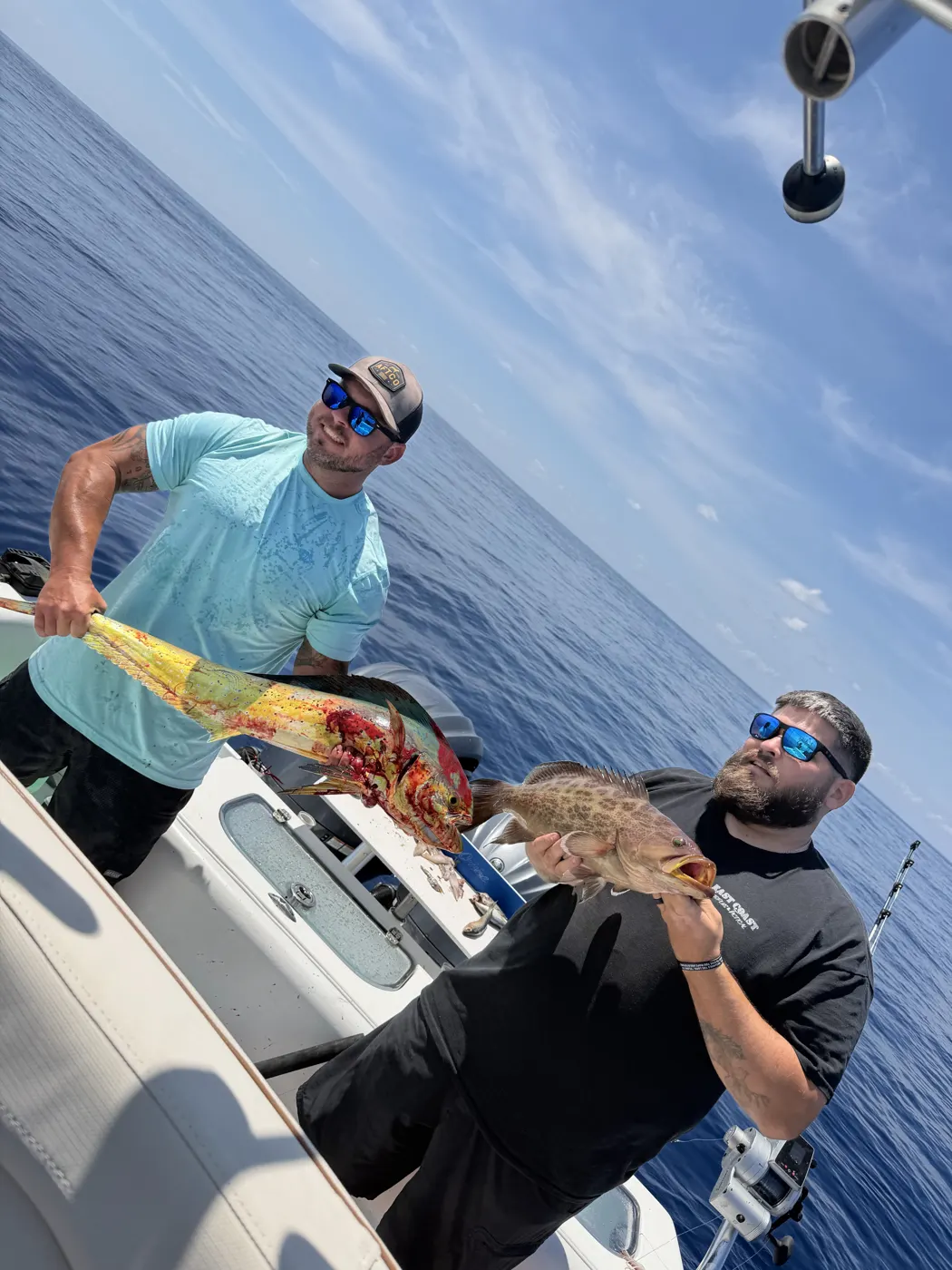
| Mahi-Mahi | Coryphaena hippurus | Dolphin, dolphinfish, dorado. By size: peanut or chicken (small), teenager (a fish in the teens of pounds), bull (large, blunt-headed male), gaffer (big enough to gaff) |
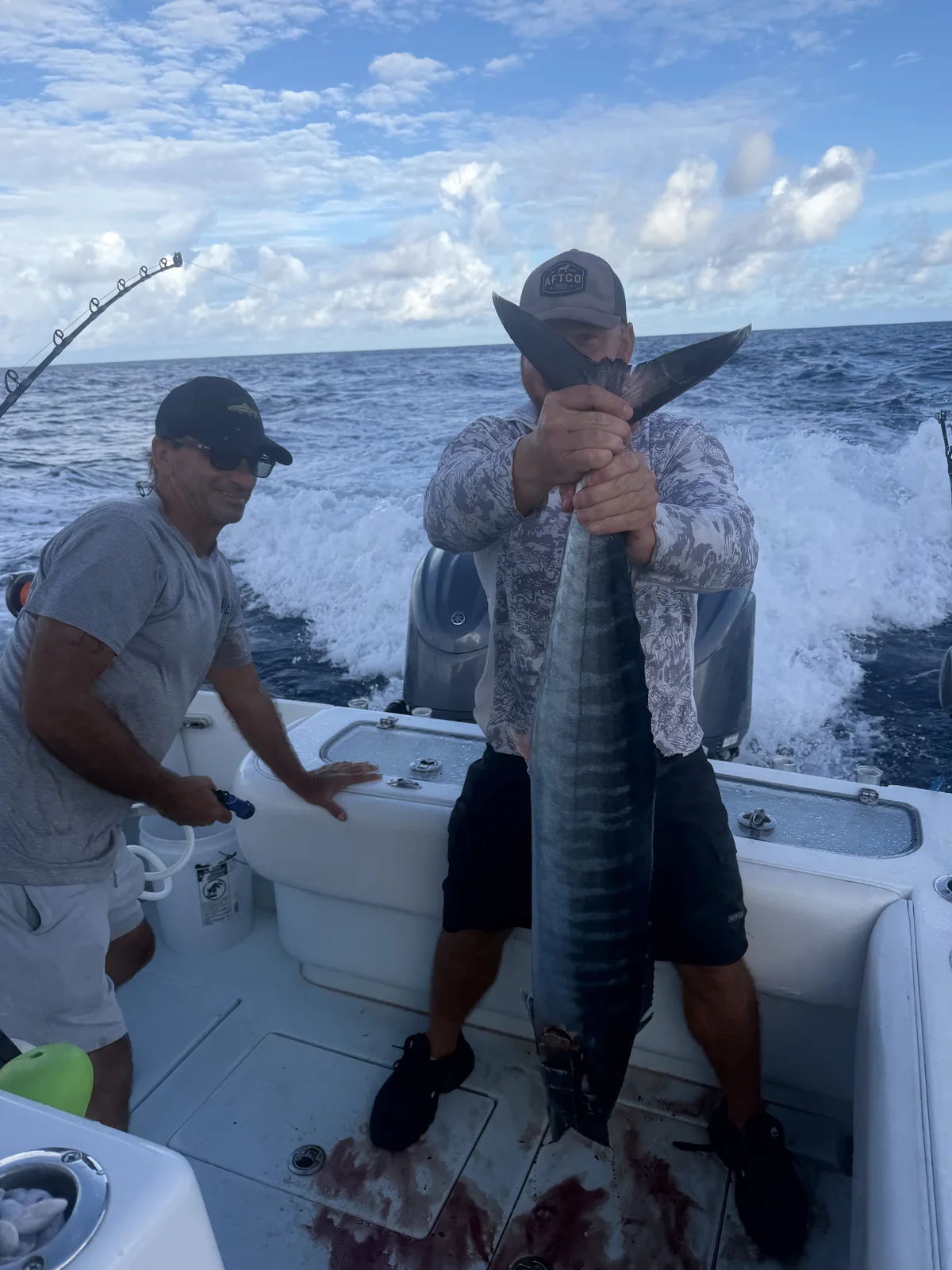
| Wahoo | Acanthocybium solandri | Hoo, ono |
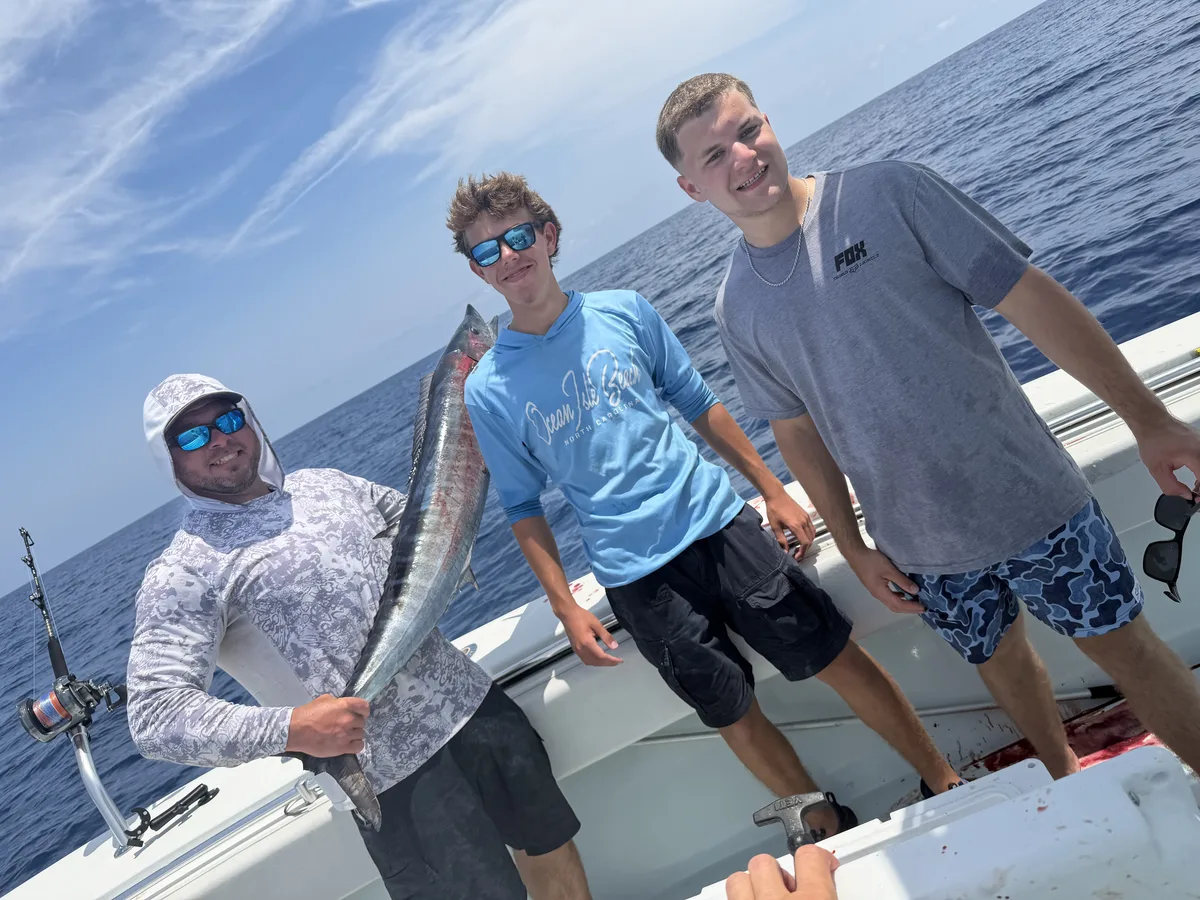
| King Mackerel | Scomberomorus cavalla | Kingfish, kings; smoker (a big one) |
| Spanish Mackerel | Scomberomorus maculatus | Spanish, spaniards |
| Little Tunny (False Albacore) | Euthynnus alletteratus | Albies, fat alberts — also commonly (and incorrectly) called “bonito” |
| Atlantic Bonito | Sarda sarda | Bonito — the fish false albacore actually gets mistaken for |
| Cobia | Rachycentron canadum | Ling, lemonfish, crab-eater, brown bomber, chocolate thunder; slobberknocker (a big one) |
| Bluefish | Pomatomus saltatrix | Blues, choppers |
| Blue Marlin | Makaira nigricans | ”The man in the blue suit” |
| White Marlin | Kajikia albida | Whites |
| Sailfish | Istiophorus platypterus | Sails |
| Swordfish | Xiphias gladius | Broadbill, swords |
| Yellowfin Tuna | Thunnus albacares | Ahi, yellowfin, fins |
| Bigeye Tuna | Thunnus obesus | Bigeye |
| Blackfin Tuna | Thunnus atlanticus | Blackfin |
| Bluefin Tuna | Thunnus thynnus | Bluefin; football (a small, school-sized one) |
| Skipjack Tuna | Katsuwonus pelamis | Skipjack, skippies |
| Tarpon | Megalops atlanticus | Poon, silver king |
| Large coastal sharks | various | ”The man in the gray suit” |
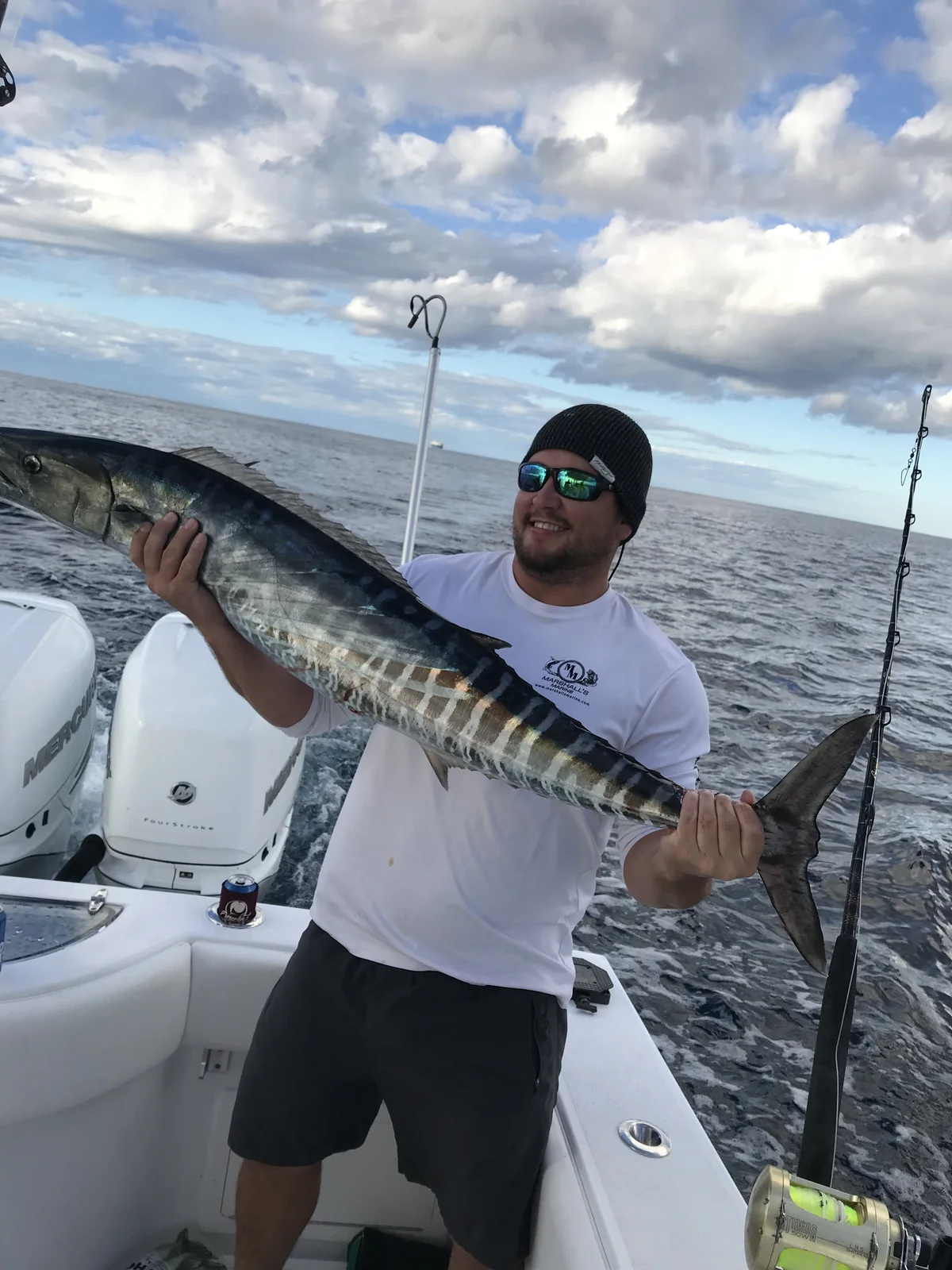
A few of these are worth slowing down on. Bonito and false albacore get swapped constantly — the fish most people catch trolling small spoons or jigs nearshore and call a “bonito” is almost always a false albacore (little tunny), not an actual Atlantic bonito, which is a different species entirely. They look similar at a glance, but the real bonito has solid diagonal stripes on its back where an albie has the broken, worm-track markings. And “man in the blue suit” (blue marlin) and “man in the gray suit” (any large shark) are two of the more colorful pieces of dock slang you’ll hear on a mate’s radio call — both are ways of saying “we’ve got serious company” without saying it outright over an open channel.
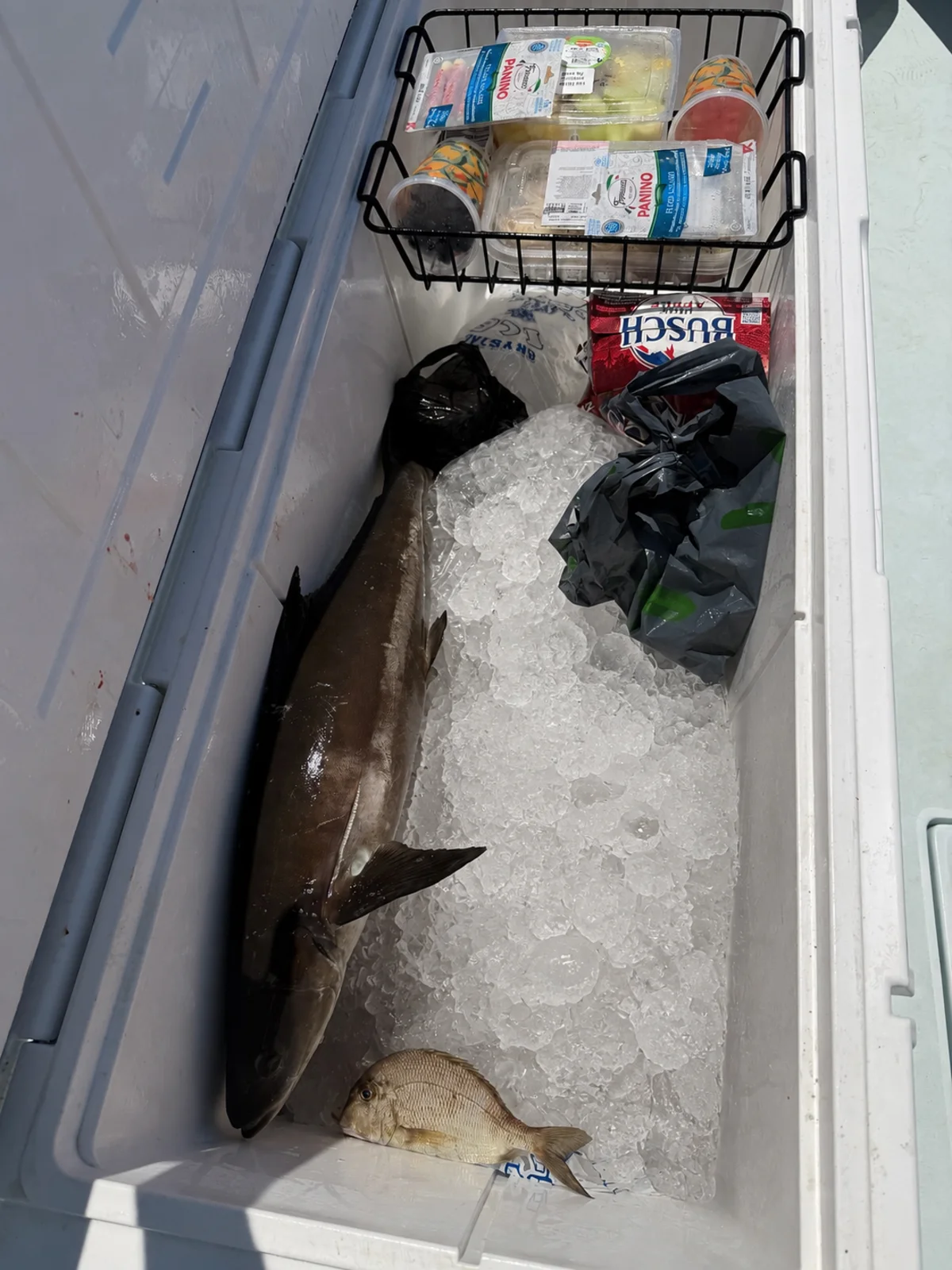
A cobia like this one earns every one of its nicknames — brown bomber, chocolate thunder, and, once it’s big enough to really put up a fight boatside, slobberknocker.
Bottom fish
| Common name | Scientific name | Also called |
|---|---|---|
| Red Snapper | Lutjanus campechanus | Reds, ARS (American Red Snapper) |
| Red Grouper | Epinephelus morio | Reds — yes, same nickname as red snapper |
| Red Drum | Sciaenops ocellatus | Redfish, red drum, channel bass, spottail (bass); puppy drum (a juvenile); also just “reds” |
| Vermilion Snapper | Rhomboplites aurorubens | Beeliners |
| Yellowtail Snapper | Ocyurus chrysurus | Yellowtails |
| Gag Grouper | Mycteroperca microlepis | Gags |
| Scamp | Mycteroperca phenax | Scamp |
| Black Sea Bass | Centropristis striata | BSB, sea bass; blackfish in a lot of Carolinas dock talk |
| Greater Amberjack | Seriola dumerili | AJ, reef donkey |
| Almaco Jack | Seriola rivoliana | Almaco |
| Gray Triggerfish | Balistes capriscus | Triggers |
| Hogfish | Lachnolaimus maximus | Hog |
| Blueline Tilefish | Caulolatilus microps | Blueline |
| Red Porgy | Pagrus pagrus | Porgy, silver snapper, stinky pinky |
| White Grunt | Haemulon plumierii | Grunt |
| Sheepshead | Archosargus probatocephalus | Convict, convict fish |
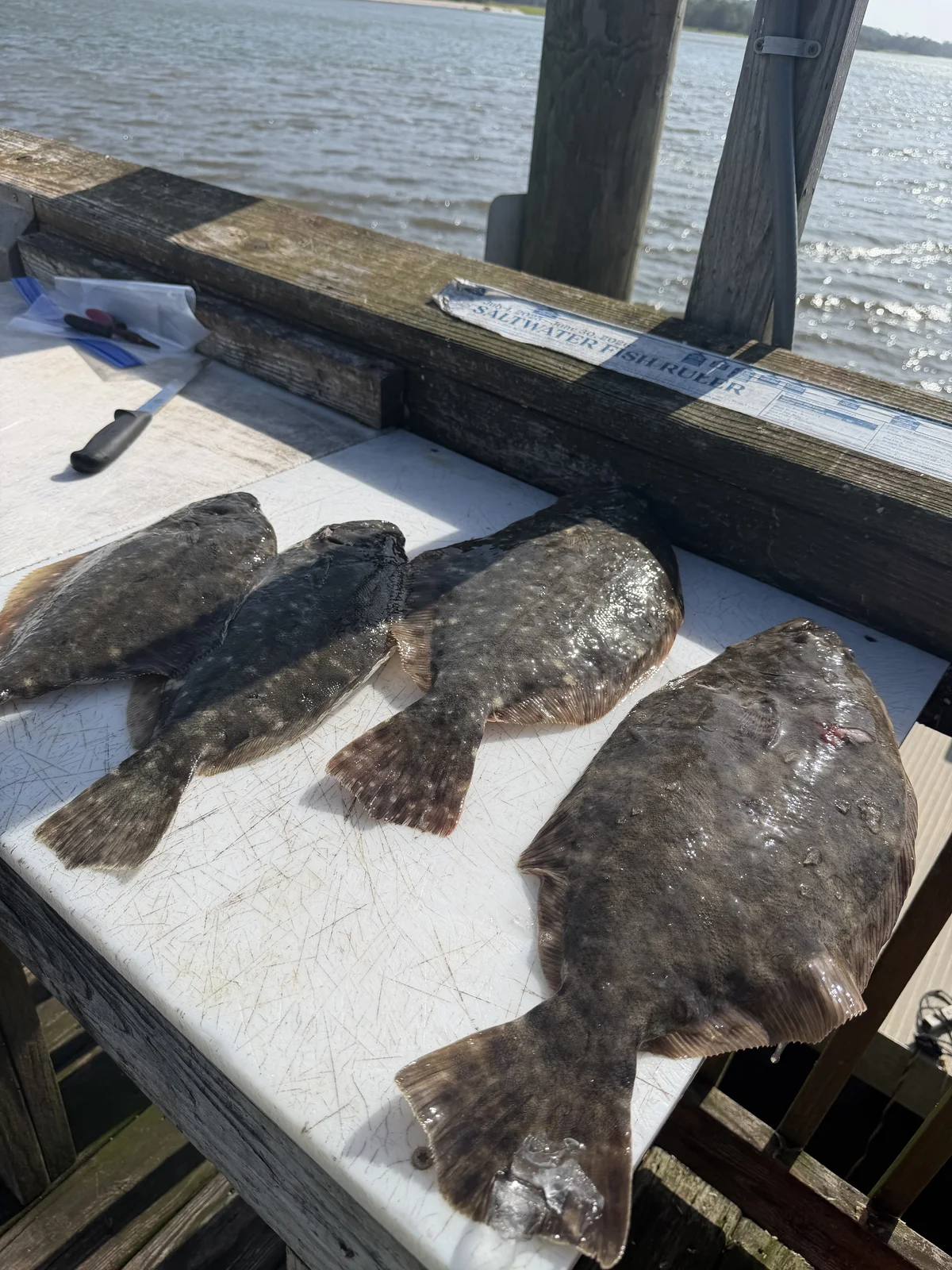
| Flounder (Southern, Summer, Gulf) | Paralichthys spp. | Flatties, flatfish; doormat (a big one) |
| Black Drum | Pogonias cromis | Drum; puppy drum (a juvenile — same nickname juvenile red drum gets) |
| Spotted Seatrout | Cynoscion nebulosus | Specks, speckled trout |
| Weakfish | Cynoscion regalis | Gray trout, sea trout, tiderunner |
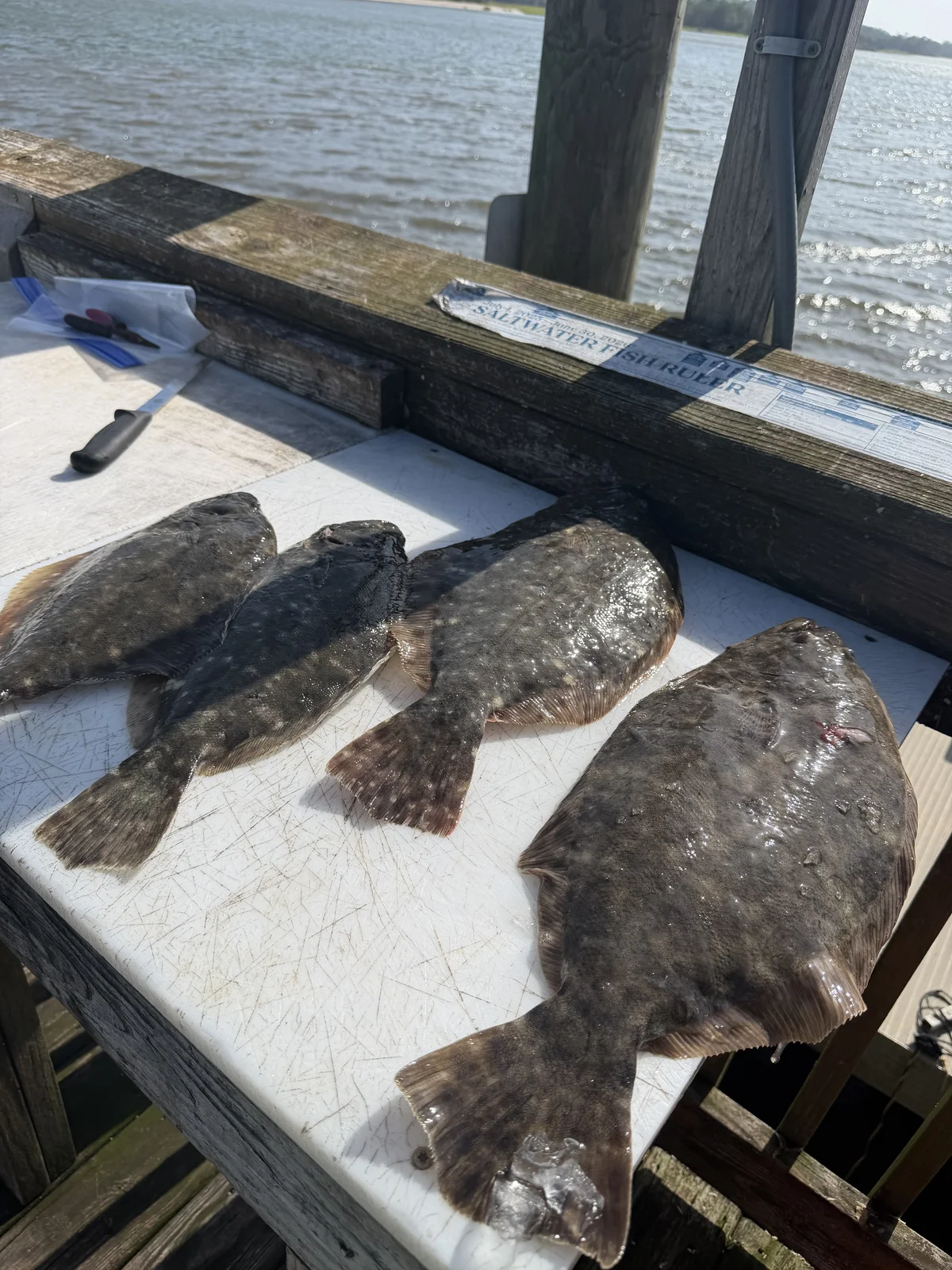
A spread of flatties like this is exactly the size range where “doormat” starts getting thrown around for the biggest of the bunch.
This is where the real naming traps live. “Reds” alone means three completely different fish depending on where you’re fishing and what’s biting — red snapper, red grouper, and red drum all answer to it, and only context tells you which one someone actually caught. “ARS” is the more specific version of that for red snapper, short for American Red Snapper, mostly heard in South Atlantic and Gulf circles where it matters to distinguish the real thing from other snapper. And “blackfish” is a regional trap of its own: in a lot of Carolinas dock talk it means black sea bass, but head to New England and “blackfish” means tautog — a completely unrelated species. Same word, two different fish, depending on which coast you’re standing on.
Red porgy’s nicknames have a story behind them too: “stinky pinky” and “silver snapper” both stuck because red porgy spent years under tight harvest restrictions in the South Atlantic as the stock rebuilt from past overfishing, which made it a fish anglers talked about — and joked about — more than they actually kept. And “puppy drum” is a genuine gotcha: it’s the nickname for a juvenile red drum, but plenty of anglers use the exact same term for a small black drum, which is a different species that happens to school in the same water.
A couple that aren’t even fish
Dock slang doesn’t stop at fish. “Bugs” is common shorthand for lobster, and “poor man’s scallops” refers to the cut, punched-out discs of stingray wing meat — a real thing people eat, not a joke, and a good example of how far this kind of nickname culture extends beyond what’s actually swimming on the end of your line.
Why the official name actually matters
None of this slang is wrong, exactly — it’s just not what shows up on a size-limit chart, a species ID sheet, or a federal closure notice. Regulations, tournament rules, and dockside weigh-ins are all written against the official common name (and often the scientific name, to remove any doubt), which is exactly why a fish that’s fine to keep under one nickname can be the wrong fish entirely under another. The scamp grouper regulations piece is a good example of how much this matters in practice — scamp, gag, and black grouper get confused constantly, with real consequences for whoever’s holding the cooler when it gets checked. When it’s not obvious which fish is actually on the hook, the scientific name is the tiebreaker nobody can argue with.
Bottom line
Nicknames are half the fun of a day on the water, but they’re not built for precision — “reds,” “blackfish,” and “bonito” all mean different things depending on who’s talking and where you’re standing. Knowing both sides — the name on the regulation sheet and the name that’ll actually get you a nod at the dock — is the difference between talking like you know the water and actually knowing what’s in the box.
This article may contain affiliate links. If you buy through them, we may earn a small commission at no extra cost to you. Learn more.