Scamp Grouper's New Math: One Per Person, and the Rule of 3
Scamp might be the best-eating grouper on the bottom, and the rules around them have gotten specific enough that plenty of experienced crews are unknowingly fishing them wrong. Here’s the current South Atlantic picture, explained the way it works on a deck instead of the way it reads in the Federal Register — verified against SAFMC regulations as of this writing (July 2026). If you’re not sure what’s actually in the box versus what someone called it on the radio, the East Coast fish names and nicknames guide covers exactly that gap.
The scamp-specific rule: one per person
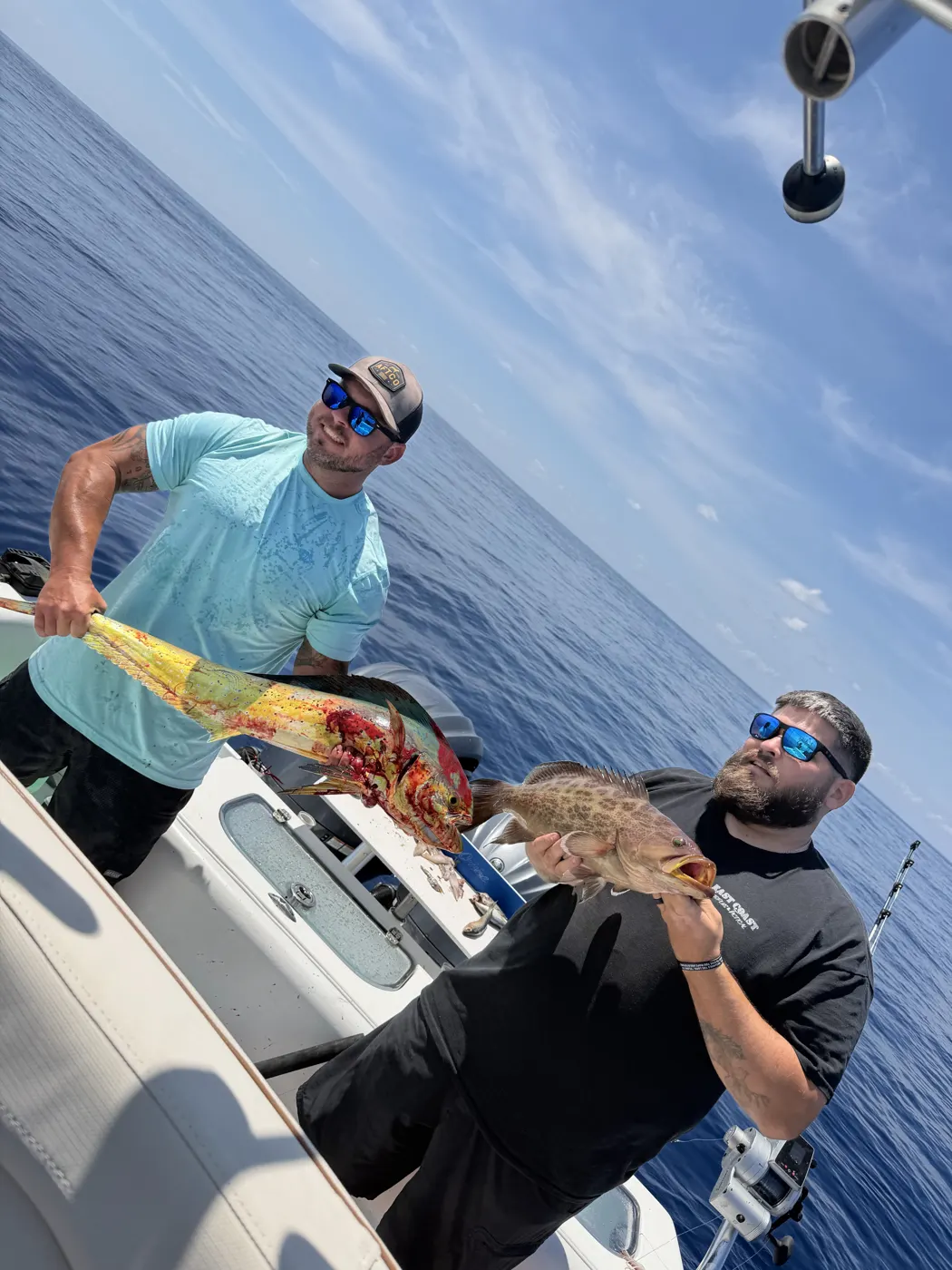
Scamp now effectively sit in their own category: the limit is one fish per person per day — scamp or yellowmouth grouper, combined. Not one of each. One total between the two species.
Why are scamp and yellowmouth lumped together? Look at them side by side and you’ll know — they’re close cousins that plenty of anglers can’t reliably tell apart at the rail. Combining them into one sub-limit means the regulation works even when the ID is uncertain, which is honest rule-making for once. (For the rest of the complex, ID absolutely matters — SAFMC publishes a shallow-water grouper ID guide worth keeping on the boat.)
The other scamp numbers: 20-inch total length minimum, and the season follows the shallow-water grouper spawning closure — closed January 1 through April 30 each year, open the rest (red grouper off NC and SC stay closed until June 1).
The rule of 3
Here’s the framework the scamp limit lives inside, and the part that trips up more crews than anything else: the South Atlantic runs a 3-fish aggregate per person per day for grouper and tilefish combined.
Read that again, because both halves matter:
- Three total — not three of a kind. All your groupers and tilefish together count toward one pool of three.
- Sub-limits nest inside it. And there isn’t just one sub-limit — there are two.
Scamp and yellowmouth aren’t the only pair capped at one fish combined. Gag and black grouper share the exact same structure — one fish per person per day, gag or black, not one of each. Two separate cousin-species pairs, two separate one-fish caps, both nested inside the same 3-fish aggregate. Miss either pairing and the math above looks legal when it isn’t.
Worked examples, per angler:
| Day’s catch | Legal? | Why |
|---|---|---|
| 1 gag + 1 scamp + 1 red grouper | ✔ | 3 total; gag alone satisfies its own 1-fish cap, scamp alone satisfies its own 1-fish cap, red grouper carries no sub-limit of its own |
| 2 gag | ✘ | gag and black grouper share a combined cap of 1 — a second gag blows that cap regardless of the 3-fish aggregate |
| 1 gag + 1 black grouper | ✘ | same cap — it’s one fish total between the two species, not one of each |
| 1 scamp + 1 yellowmouth + 1 gag | ✘ | scamp + yellowmouth = 2 against their combined limit of 1 |
| 1 gag + 1 scamp + 1 golden tilefish | ✔ | 3 total, one from each sub-limit pair plus an unrestricted species — legal, but that’s the whole day |
| 1 gag + 3 red grouper | ✘ | 4 total against the aggregate of 3, even though red grouper itself has no sub-limit |
The gotcha most anglers miss on that fifth row: tilefish counts against the same three. Deep-drop a golden tilefish on the way in and you just spent a grouper slot. Crews planning a mixed bottom day need to think about the aggregate as a budget — three slots per person, spent however the fish come over the rail, with no more than one from the gag/black pair and no more than one from the scamp/yellowmouth pair.
One more nuance: several other species in the complex carry their own sub-limits and vessel-level rules beyond these two pairs — check the current SAFMC snapper-grouper regulations for the species you’re targeting before every trip, because these change.
The “strawberry grouper” isn’t part of this math
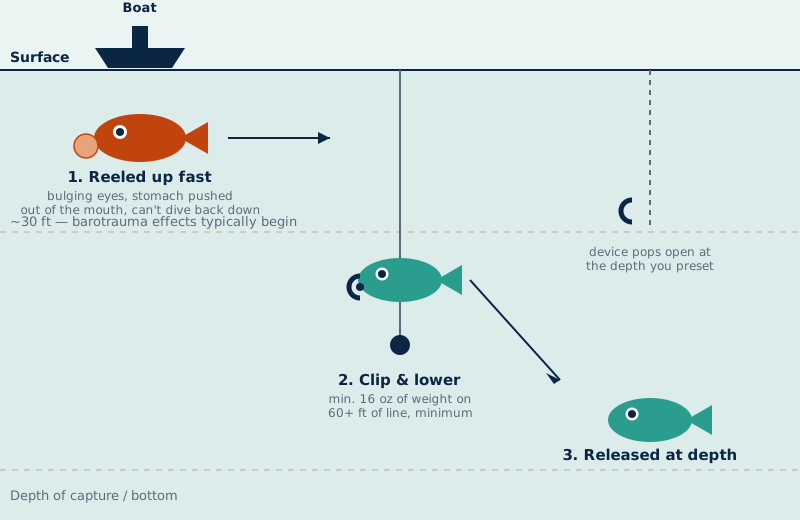
If you’ve heard someone at the dock call a fish a “strawberry grouper,” they mean speckled hind (also called Kitty Mitchell) — and despite the name, it isn’t one of the ten species in the shallow-water complex at all. It’s a separate, deeper-dwelling species, and recreational harvest and possession of it is closed entirely in North Carolina, South Carolina, Georgia, and Florida waters, verified directly against SAFMC’s species page. There’s no bag limit to fit it inside — it doesn’t count toward your three, because you can’t keep it at all. If one comes over the rail, it goes back, ideally with a descending device given the depth these typically come from.
The shallow-water grouper complex
Scamp is one of ten species in the shallow-water grouper complex, all sharing the January–April spawning closure: gag, black grouper, red grouper, scamp, red hind, rock hind, coney, graysby, yellowfin grouper, and yellowmouth grouper. When someone says “grouper season is closed,” this complex is what they mean. Two cousin-pairs inside that list of ten — gag/black grouper and scamp/yellowmouth — each carry their own one-fish-combined sub-limit; the rest currently don’t carry an individual cap beyond the 3-fish aggregate itself, though that’s exactly the kind of detail worth reconfirming before every trip since it changes.
The gear rules still ride along
Everything in the snapper-grouper fishery carries the standard equipment requirements covered in the July report: descending device rigged and ready, dehooking tool aboard, and non-stainless circle hooks with natural bait. A scamp released properly at depth is next year’s keeper — and with a one-fish limit, you’ll be releasing plenty of them.
Why the tighter scamp rule exists
Scamp and yellowmouth got their own restrictive sub-limit for the usual reason: stock concerns flagged in assessments, addressed by cutting harvest without closing the fishery outright. Whatever you think of the trend — and bottom fishermen have opinions — the practical read is simple: the days of boxing scamp until you’re tired are over, the one you keep should be a good one, and knowing the rule-of-3 math before lines go down keeps the trip fun and any boarding painless. If grouper is the day’s plan, the chicken rig vs. knocker rig breakdown and spot-lock approach that fill the rest of your three slots are covered elsewhere on the site.
Regulations verified directly against SAFMC species pages, updated July 24, 2026. Seasons, limits, and sub-limits change — confirm current rules before every trip.
This article may contain affiliate links. If you buy through them, we may earn a small commission at no extra cost to you. Learn more.