Planer Fishing for Wahoo: The Meat-Fishing Change-Up
High-speed trolling gets the glory, but ask around any Carolina marina about who consistently comes home with wahoo in the box and you’ll hear the same quiet answer: the planer guys. A planer takes your bait out of the pretty part of the water column and puts it 15–30 feet down, where wahoo actually spend their day. It isn’t glamorous. It works.
What a planer does
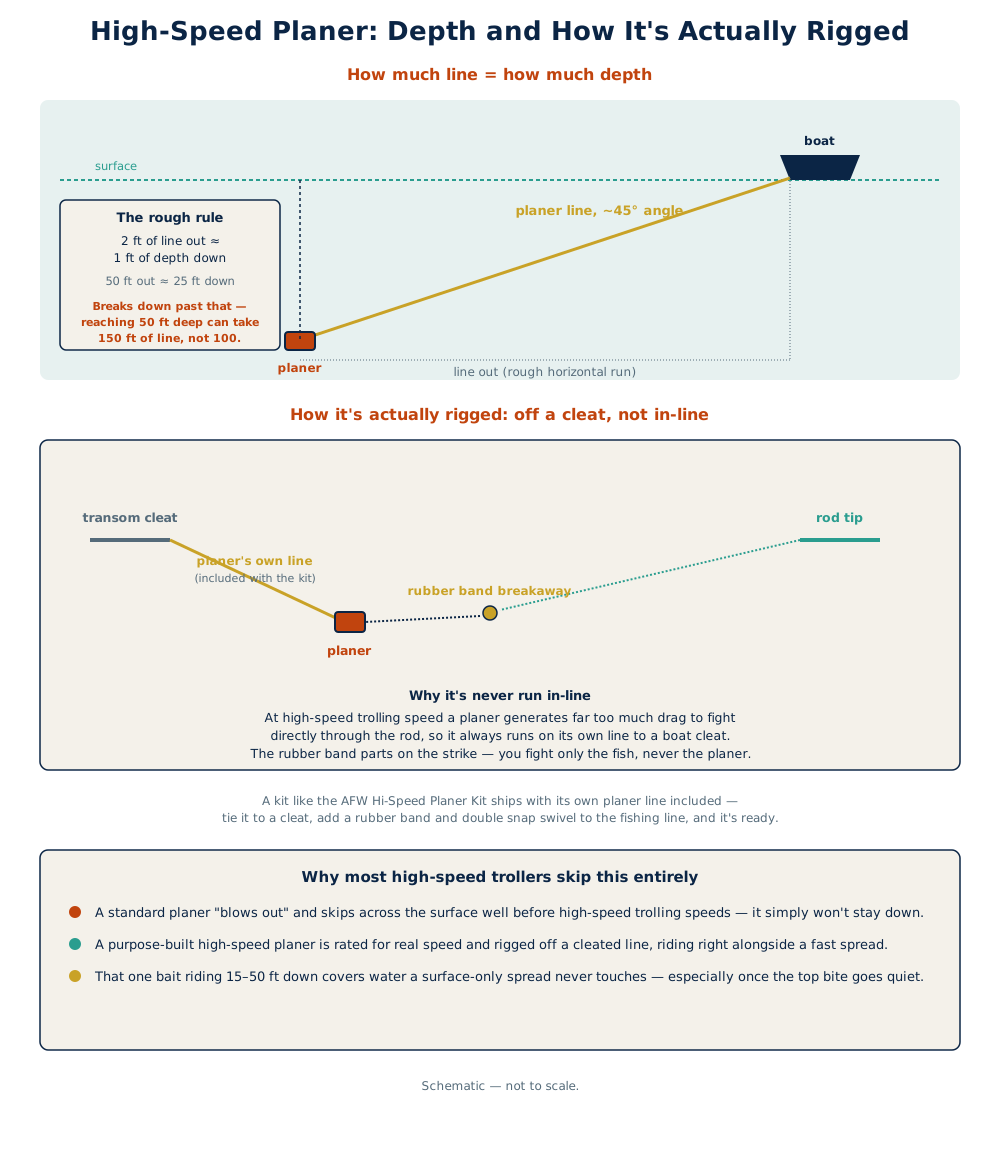
A trolling planer is a weighted metal diving plane that runs your bait at depth while you troll at normal speeds, then trips when a fish strikes so you fight the fish, not the plane. Surface baits catch fish that are looking up. A planer bait sits in the strike zone the entire troll — and on days with a thermocline, bright sun, or scattered bait deep, that’s the difference between a bent rod and a boat ride. This setup is built around normal 6-8 knot trolling speed — running a planer inside a genuine high-speed spread instead takes a planer actually rated for it, since a standard planer blows out and skips the surface well before 12+ knots.
Sizes and depth
Planer depth depends on size, speed, and how much line you let out, but working numbers at 6–7 knots:
| Planer | Approximate depth | Typical use |
|---|---|---|
| #4 | 10–15 ft | Lighter tackle, shallower structure |
| #8 | 15–25 ft | The all-around wahoo standard |
| #16 | 25–35 ft | Deeper thermoclines, bigger baits |
The #8 is the one to own if you own one. Faster trolling lifts the planer shallower; more line out runs it a touch deeper until drag flattens the curve. Want a number for your exact setup? Run it through our planer depth calculator.
The rig
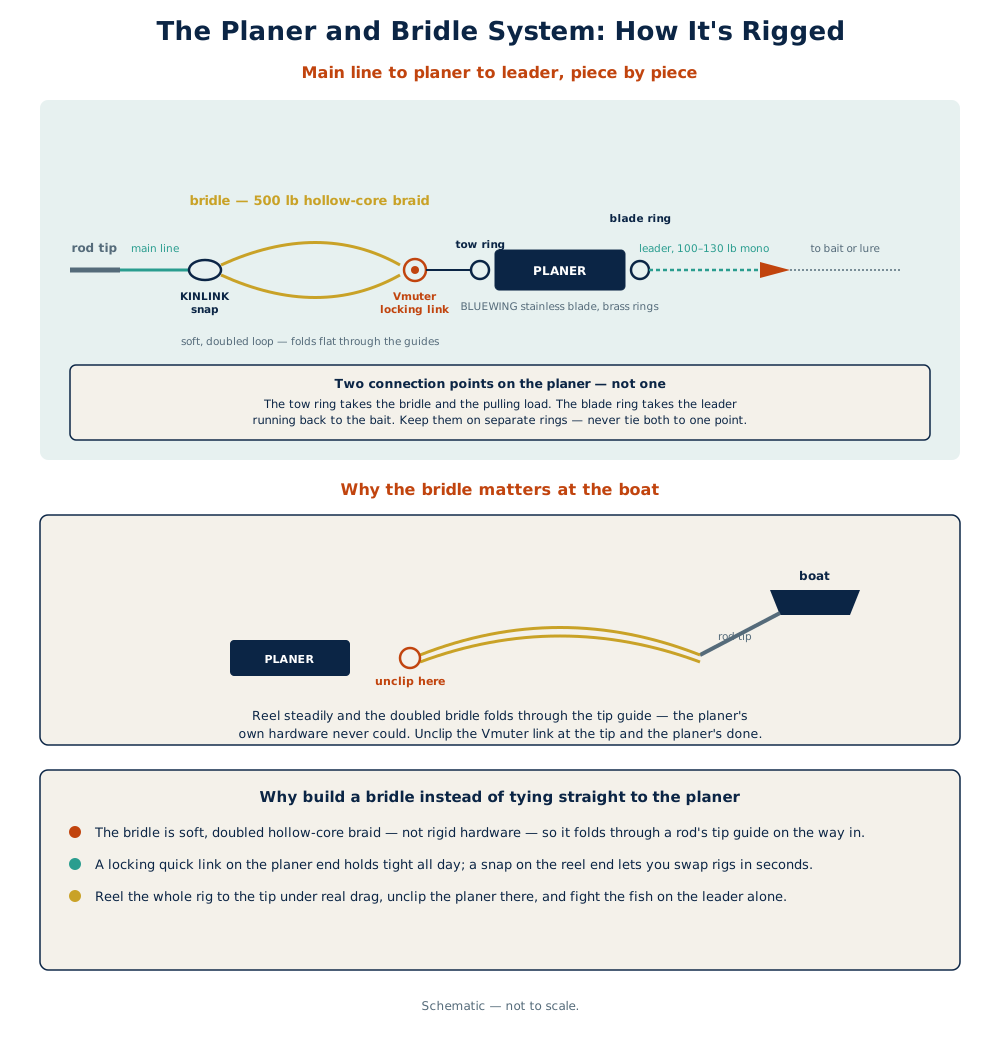
The standard direct-line rig: main line to the planer’s tow point, then a long leader from the planer’s back eye to the bait. The leader run matters — short leaders put the bait in the planer’s turbulence, and wahoo in clear water want separation. A common setup is 30 to 60 feet of 100–130 lb mono behind the planer, ending in a sea witch over a ballyhoo on a wire haywire twist for the toothy critters — see the haywire twist and skirt-over-ballyhoo rigging guide for exactly how that bait and wire connection gets built. Sea witch colors follow the usual wahoo logic — darker patterns and blue/white both earn their keep. A Drone spoon behind the planer is another proven wahoo option alongside the sea witch and ballyhoo.
This is heavy-tackle fishing not because of the fish but because of the gear in the water: a #8 planer under load pulls hard, and reeling one in with a fish attached is real work. 50-class two-speed lever drags are the right tool — the same Okuma Makaira 50s from my high-speed program pull planer duty on my boat, and low gear earns its price tag on every planer retrieve. See the trolling reel buyer’s guide for the class breakdown.
An alternative worth knowing: the planer bracket (transom-mounted, planer on its own heavy cord, bait line clipped to it with a release). It keeps the fight clean of the planer entirely, at the cost of rigging complexity. Most boats start direct-line; big planer programs graduate to brackets.
Hollow-core bridles: the end of cleating off
For years the standard way to deal with a planer at the boat was the hard way: reel the whole rig in, cleat off the main line to take the load, then unclip the planer by hand while it’s straining against the cleat. It works, but it’s slow, it’s hard on your hands and your gear, and every fight ends with a wrestling match at the rail before you even start actually fighting the fish.
What’s taken over most serious planer programs instead is a hollow-core bridle. Rather than tying straight to the planer, you splice a short loop of 400–500 lb hollow-core braid into the rig, run through a rod with a big enough tip guide for the bridle to pass through cleanly. That lets the whole rig — planer included — come all the way to the rod tip under real drag, the same way you’d fight anything else on the boat. No cleat, no hand-lining, nothing to wrestle before the fish fight even starts. When the bridle’s clip reaches the tip, you unclip it in one motion and the planer’s out of the equation entirely.
It does ask a couple of specific things of your gear: a rod with a roller tip or a large ring guide the bridle can pass through without chafing, and a reel with real drag capacity, since a #8 planer or larger can demand 20 to 50 lb of drag just to hold its dive angle — 80-class two-speed reels are the standard for exactly that reason. I run a Tackle Room planer bridle kit — it bundles the bridle, a matched planer, 100 feet of leader, and the rigging hardware together, sized right for wahoo at the #24 or #32 size and real trolling speed. Worth knowing before you rely on one under a big fish: a few reviews flag the stock swivels as the weak point under hard drag, so it’s worth checking crimps and swivel ratings yourself before the first real wahoo tests them. Building the bridle system yourself piece by piece instead of buying it bundled? See the planer and bridle rigging guide for the full parts list and how each connection goes together.
Working it into the spread
A planer line runs close and deep while your surface spread works behind it — one or two planers off the corners fit under a standard spread without tangling, as long as you stagger distances and remember they’re there on every turn. Planer rods live in the corner holders, drags set heavy, clickers on. Strikes announce themselves.
The rhythm of it
Planer fishing rewards boring discipline: same speed, working the edge, checking the bait when the planer starts riding wrong. When a wahoo eats at depth, the planer trips, the rod lurches, and the fight comes to you at full drag with the fish already tired of towing hardware. Boat-side rules are the same as always with wahoo — assume it has one more run and keep your hands away from the front half.
Gear checklist
- #8 trolling planer (and a #16 for deep days)
- 100–130 lb mono leader stock, single-strand wire, haywire-twist tools
- Sea witches in dark and blue/white patterns, rigged ballyhoo, a Drone spoon
- 50-class two-speed lever drag reel on a stout trolling rod
- A hollow-core planer bridle kit, and a rod with a tip guide large enough to run it through
This article may contain affiliate links. If you buy through them, we may earn a small commission at no extra cost to you. Learn more.