Descending Devices: Why They're Required, and How They Actually Work
Descending device has come up in the safety checklist, the scamp grouper regs breakdown, and the July report — always as a required item to have aboard, never explained on its own. It’s overdue, because it’s one piece of gear that’s both a legal requirement and genuinely the difference between a released fish that survives and one that doesn’t.
What barotrauma actually is
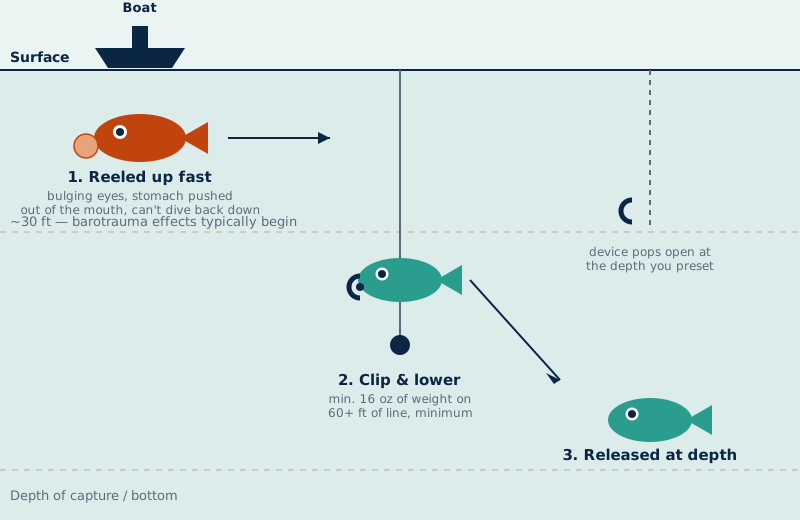
Reel a fish up fast from real depth and the gas inside it expands faster than its body can vent it. That’s barotrauma, and per SAFMC, it generally starts affecting fish caught deeper than about 30 feet — which covers a lot of bottom fishing, not just the deep-drop trips. The signs are hard to miss once you know them: bulging eyes, the stomach pushed out through the mouth, bubbling under the scales, and a fish that floats on the surface after release instead of swimming down. A fish in that state that gets tossed back over the side doesn’t get a second chance — it sits on top until something eats it or the sun does.
The fix, in order of preference
SAFMC ranks three ways to deal with it, and descending devices are the recommended approach:
- A descending device. Weighted, non-invasive, and the preferred method — it doesn’t puncture anything, and it gets the fish back to a depth where the pressure change reverses the damage.
- Venting, if you’re trained to do it: a sharp, hollow needle inserted into the swim bladder to release trapped gas. It works, but it’s easy to do wrong — puncture the protruding stomach instead of the swim bladder and you’ve made things worse, not better. Worth knowing: even if you vent a fish, you’re still required to have a descending device readily available. Venting doesn’t substitute for carrying one.
- Return to depth, as deep as you reasonably can, for fish caught especially deep.
What’s actually required aboard
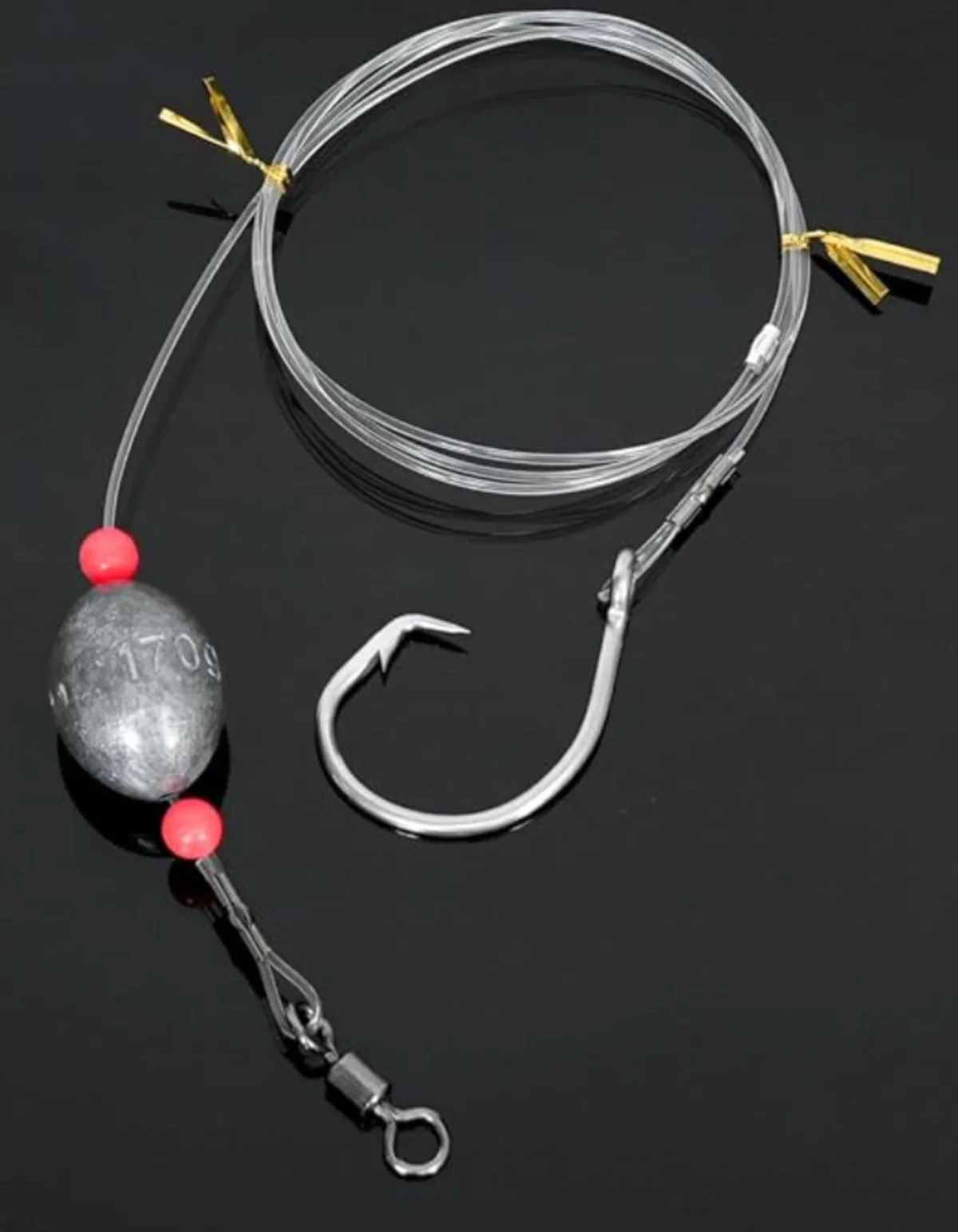
Fishing for or possessing snapper-grouper species in South Atlantic federal waters requires a descending device readily available for use, rigged with a minimum of 16 ounces of weight and at least 60 feet of line. That’s the legal floor. SAFMC’s own recommendation for actually getting a fish back down goes further: roughly 1 pound of weight for every 5 pounds of fish, since 16 ounces is enough to satisfy the requirement but not always enough to fight a bigger fish’s buoyancy on the way down.
The three types
- Lip clamp — a spring-loaded or pressure-release clip that grabs the fish’s lower jaw. This is the style most anglers run, including the pressure-triggered version below.
- Inverted hook — a large, weighted hook you set through the fish’s lip or jaw; a sharp upward tug releases it once you’re at depth.
- Weighted crate — literally a milk-crate-style cage the fish rides down in, then swims out of once you’re deep enough. More common on for-hire boats handling volume.
How to actually use one
The clip-style devices with an adjustable, pressure-triggered release are close to foolproof once you’ve done it a couple of times: clip it to the fish’s lower jaw, set the release depth if the device has adjustable settings, and lower it on a rod or a dedicated line at a slow, steady pace — dropping it too fast can shock the fish or fail to trigger the release cleanly. Give it a few seconds once it hits the target depth or the bottom, then retrieve. Done right, the jaws pop open exactly where you set them and the fish swims off on its own.
What I run
The SeaQualizer descending device is the clip-style version, and it’s built around exactly that pressure-release idea — set the depth by turning and locking a plug on the body, clip the fish, and it releases automatically once it hits that depth, no guesswork or second trip down required. It comes in a few depth-range versions — a shallow range (30/50/70 ft), a standard range (50/100/150 ft), and a deep range (100/200/300 ft) — so it’s worth matching the version to the depths you actually fish rather than defaulting to whichever one shows up first in search results.
Bottom line
If you fish bottom structure in the South Atlantic at all, this isn’t optional gear — it’s required, and for good reason. A fish with bulging eyes and its stomach hanging out of its mouth isn’t going to make it back down on its own, and a descending device is the simplest, least invasive way to fix that. Sixteen ounces and sixty feet of line is the legal minimum; rigging it properly and actually using it on every fish that needs it is what actually keeps the fishery — and next year’s keeper — alive.
This article may contain affiliate links. If you buy through them, we may earn a small commission at no extra cost to you. Learn more.