Deep-Drop Tilefish: The Complete Guide to Depths, Rigs, and Gear
Deep dropping for tilefish is a different sport than anything else on this site. You’re not reading a temperature break or working a piece of structure you can see on the sounder in 100 feet of water — you’re sending bait 600, 700, sometimes 800 feet down to a mud bottom you’re trusting the chart to describe accurately. Get the depth, the rig, and the gear right and it’s some of the most consistent bottom fishing available once the shallow-water grouper season closes. Get any of the three wrong and you’ll spend a long day cranking up nothing.
What you’re actually targeting
“Tilefish” on the mid-Atlantic and Carolina coast almost always means one of two species, and they don’t live in the same place:
Golden tilefish live deep — typically 600 to 800 feet — on soft mud and clay bottom at the edge of the continental shelf, often right where the bottom starts sloping off hard toward the canyons. They dig burrows in that mud and hold tight to it, which is why golden tilefish spots tend to be small, specific pieces of bottom rather than a broad area.
Blueline tilefish (“mangoes” or “grey tilefish” on the radio) run shallower and rougher — roughly 250 to 600 feet, on harder bottom with rock, rubble, and relief mixed into the mud. They fight harder for their size than a golden and show up more often mixed in with grouper on the same drops.
Both are excellent eating, and both count against the same regulation — more on that below.
Where to find them
This is a game won or lost on the chart before the bait ever leaves the boat. You’re looking for a specific kind of bottom, not just a depth number:
- Golden tilefish: the mud edge itself — a break where the bottom transitions from the shelf to the steeper drop toward blue water. Small humps, depressions, and grade changes on otherwise featureless mud are where they burrow.
- Blueline tilefish: harder bottom with some vertical relief mixed into that same depth range — a rock pile, ledge, or hard patch sitting inside the mud.
Stock bottom charts genuinely struggle to show this kind of subtle relief at deep-drop depths, which is exactly the gap CMOR mapping chips are built to close. Pair good bottom detail with the sounder setup covered in choosing an offshore fishfinder/chartplotter and mark every productive spot the moment you find it — deep-drop bottom this specific doesn’t reveal itself twice.
Gear for the depth
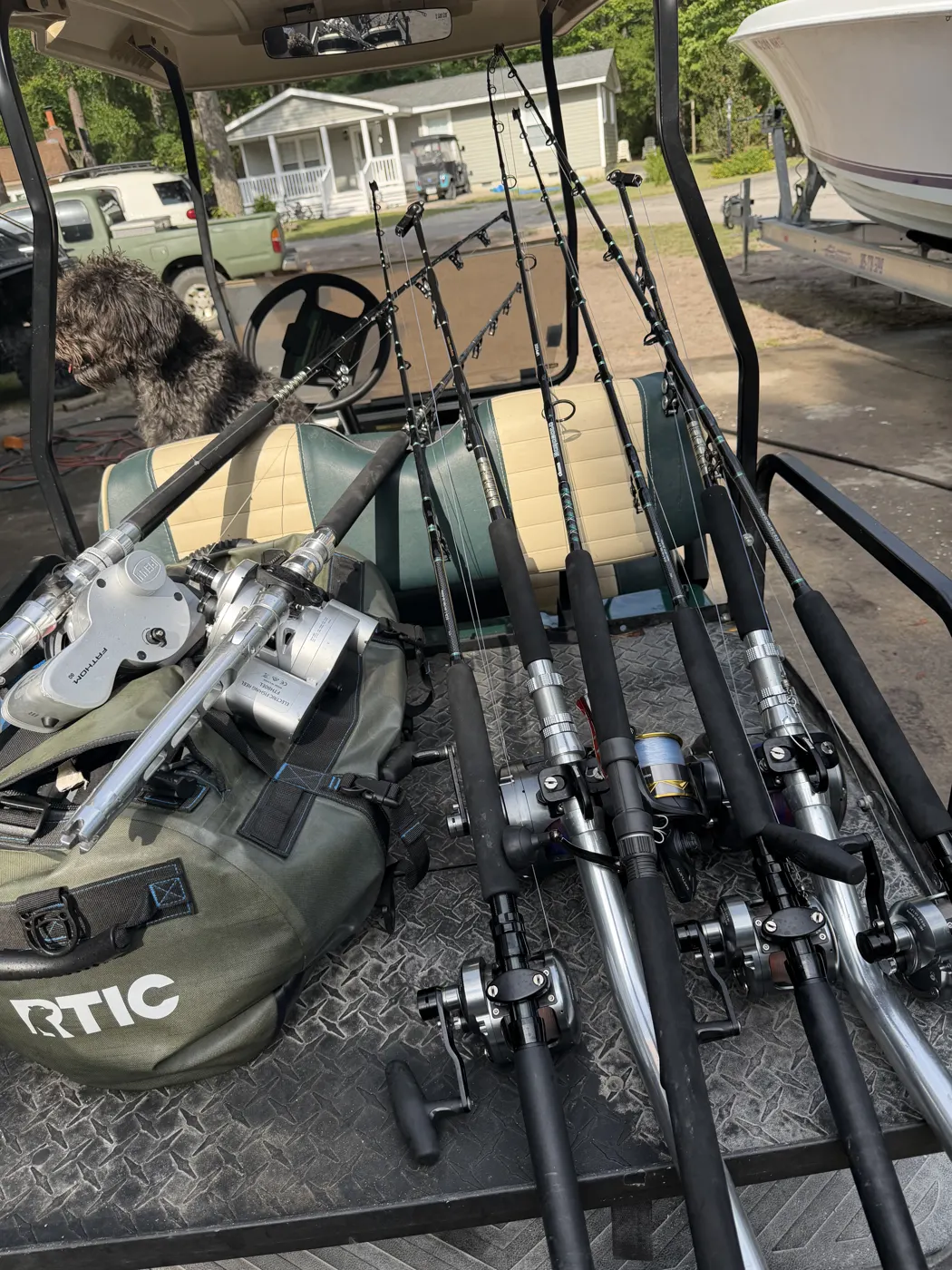
Six-plus hundred feet of water with a multi-hook rig and lead on the bottom is real weight and real line to move, over and over, all day. This is where an electric reel earns its keep — the retrieve is a workout by hand, and the electric turns it back into fishing instead of labor. A stout conventional like the Okuma Makaira can do the job manually if that’s your preference, but expect tired forearms by the third or fourth drop.
Load 65-80 lb braid for the mainline — thin diameter matters at these depths, since a thicker line takes longer to sink and drifts further off the mark before it reaches bottom. A short mono or fluoro topshot above the rig protects against abrasion on the bottom without adding meaningful stretch at that length of line.
The rig and the weight
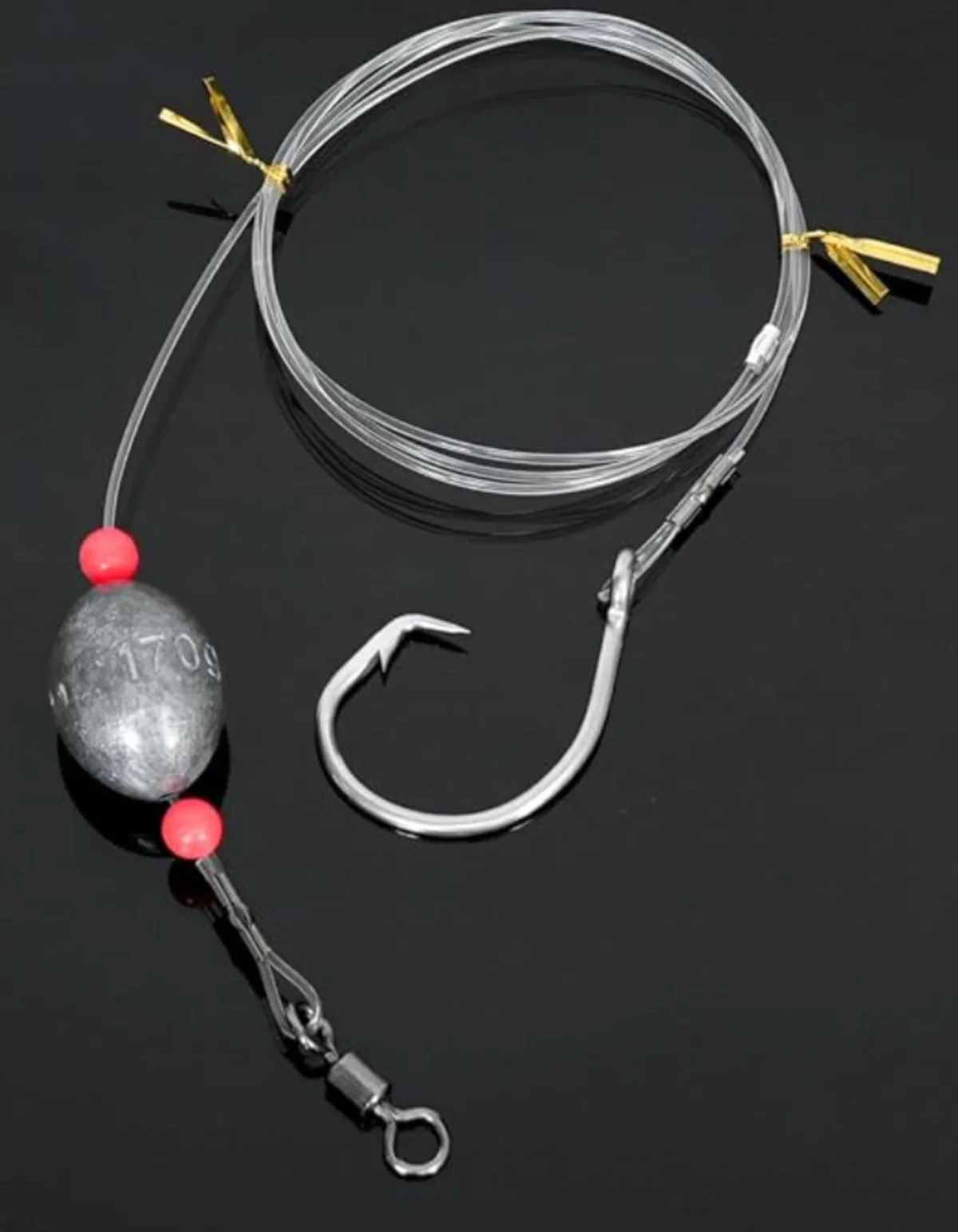
Deep-drop rigs are built on the same principle as the chicken rig covered in the grouper/snapper rig breakdown — multiple hooks on dropper loops above a single weight — just scaled up for depth and current. Three to five hooks spaced 24-30 inches apart is standard, with a heavy weight at the very bottom to get the whole rig down fast and hold it there against current.
| Depth range | Typical weight | Bottom type | Primary target |
|---|---|---|---|
| 250-400 ft | 2-3 lb | Rock/rubble mixed with mud | Blueline tilefish, grouper |
| 400-600 ft | 3-4 lb | Mud with hard relief | Blueline tilefish |
| 600-800 ft | 4-6 lb | Soft mud/clay edge | Golden tilefish |
Current is the variable that moves you off that table in either direction — a hard-running current calls for more lead than the depth alone would suggest, since the goal is a rig that drops close to straight down instead of sailing off the spot on the way to the bottom.
Bait
Squid strips and whole squid are the standard bait and hold up well over a long soak at depth. Cut bait — mackerel, bonito, or whatever’s in the bait freezer — works too, especially on the bottom-most hook where a bigger scent profile helps in murky, current-heavy water. Some crews add a glow bead or small light above the top hook, since almost no ambient light reaches these depths and a little attraction goes a long way.
Working the drop
Locate the mark, get the bow over it, and let the rig fall on a controlled drop — free-spool with light thumb pressure so it doesn’t backlash on the way down but also doesn’t take forever getting there. Once it hits bottom, take up slack until you feel the weight, then work it up and down a few feet off bottom to keep the baits moving in the strike zone. A tilefish bite at that depth telegraphs as a series of taps and added weight more than a hard strike — set on anything that feels different from the steady pull of the rig.
Holding the boat on a small, specific mark for the length of a deep drop is its own challenge, and it’s exactly the problem spot-lock trolling motor control solves better than anchoring ever could at these depths — there’s no scope math to do in 700 feet of water in the first place.
The regulation catch
This is the detail that trips up more deep-drop trips than bad weather: in South Atlantic federal waters, tilefish count against the same 3-fish grouper aggregate as gag, scamp, red grouper, and the rest of the shallow-water complex. Land a couple of nice goldens on the way in from a trolling day and you’ve spent grouper slots you didn’t plan on. The full breakdown of how that aggregate math works — including the sub-limit pairs that catch even more crews off guard — is in the scamp grouper rules of three.
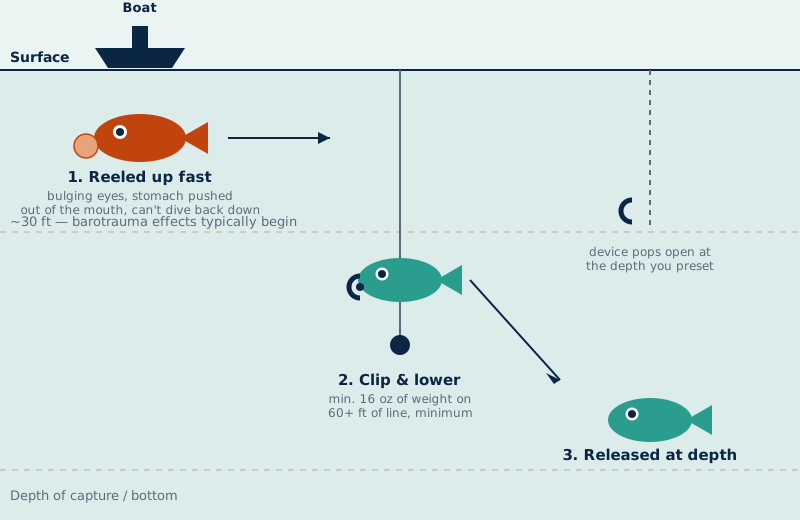
A descending device rigged and ready is also required gear any time you’re fishing for snapper-grouper species, tilefish included — see how descending devices actually work for the specifics. Worth knowing honestly: most tilefish brought up from 600+ feet don’t survive release regardless of how quickly they’re descended, given how far and fast they’ve come. That’s one more reason to fish the aggregate math conservatively rather than assume you can release your way out of a bad count.
Bottom line
Deep-drop tilefish rewards the same prep that makes any bottom trip work — good bottom detail on the chart, a rig and weight matched to the depth and current, and gear that can handle the retrieve without turning the day into an arm workout. The one thing that’s easy to overlook is the paperwork: tilefish share a bag limit pool with grouper, so know the count before the first bait goes down, not after the last one comes up.
This article may contain affiliate links. If you buy through them, we may earn a small commission at no extra cost to you. Learn more.