Chicken Rig vs. Knocker Rig: The Grouper and Snapper Breakdown
Grouper and snapper fishing comes down to two rigs more than any other decision on the boat. Get the rig wrong for the bottom you’re fishing and you’ll spend the day either getting rocked up in structure or leaving fish on the table because your bait never found them. Here’s the actual difference between a chicken rig and a knocker rig, and which one belongs on your rod for a given piece of bottom.
The knocker rig: built for heavy structure
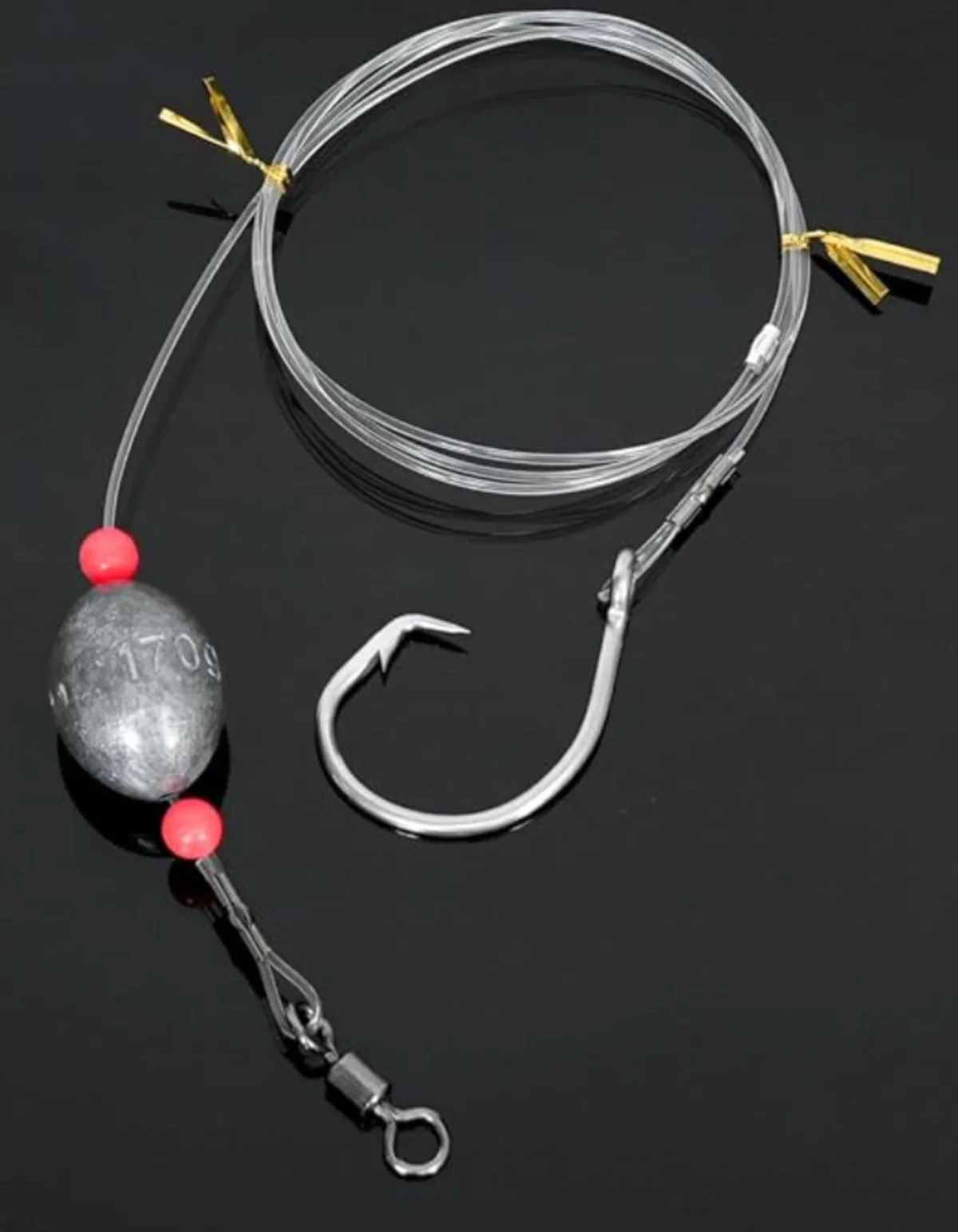
The knocker rig is about as simple as bottom rigs get, and that simplicity is the entire point. Thread an egg (or “knocker”) sinker directly onto your leader above the hook, add a bead to protect the knot from the sliding weight, and tie on a circle hook. The sinker rides right down against the hook — that’s where the name comes from, the weight “knocks” against the hook on the drop and on the bite.
That compact profile is what makes it the right call over heavy structure — wrecks, dense rock piles, ledges with overhangs and caves. There’s nothing hanging below the hook to catch on structure the way a fish-finder rig’s dangling sinker can, and the tight, straight-line profile slides through tight spaces instead of snagging in them. It also puts the weight in direct contact with the hook, so you feel a bite the instant it happens instead of it getting telegraphed through slack leader first. For gag and red grouper working wrecks and ledges, this is the standard rig for a reason.
The chicken rig: built to cover water and multiple fish
The chicken rig — also called a dropper loop rig or hi-lo rig — takes the opposite approach: multiple hooks on dropper loops strung above a single weight at the very bottom. Standard spacing is 18 to 24 inches between loops, with anywhere from two to five hooks on a rig depending on how deep and how aggressive you want to fish it.
Instead of one bait sitting tight to structure, a chicken rig covers a slice of the water column, which is exactly what you want over scattered bottom, bait balls suspended off the structure, or when you’re trying to catch more than one fish per drop. It’s the standard rig for party boats for a reason, and it’s also the go-to for deep dropping, where covering more water per drop matters even more.
The actual deciding factor
Structure density is the call, not species. Snapper and grouper both get caught on either rig — what changes is what the bottom looks like. Heavy structure with caves, ledges, and wreckage that will eat a dangling weight or dropper loops on contact calls for the knocker rig’s tight profile. Scattered structure, sand-and-rubble bottom, or any situation where you want multiple baits working different depths off one weight is a chicken rig’s job.
What to rig with
For the chicken rig, a spool of pre-tied dropper loops saves the tying time entirely — loops come continuously spaced and pre-tied, so you cut your leader length, clip on hooks, and you’re fishing. Pair it with a non-stainless, non-offset circle hook in 6/0 to 8/0 for snapper and smaller grouper — more on why that specific hook spec matters below.
For the knocker rig, a pre-rigged grouper kit with the egg sinker, bead, swivel, and mono already assembled is a real time-saver, and the components — sinker, swivel, leader material — are exactly what you’d tie yourself. One honest catch worth knowing before you fish it for snapper-grouper species, though: the hook it ships with is a stainless steel offset circle hook, and that combination doesn’t meet the current South Atlantic rule (below). Keep the rest of the pre-tied rig and simply re-tie on a compliant hook — the same non-offset, non-stainless circle hook linked above works for both rigs.
The regulation that actually governs the hook on your line
This isn’t a size-or-season rule — it’s a gear rule, which makes it directly relevant to how you tie these two rigs. Non-offset, non-stainless steel circle hooks are required when fishing for South Atlantic snapper-grouper species with hook-and-line gear and natural bait, north of 28°N latitude — a line that falls well south of Florida, meaning it covers the entire North Carolina and South Carolina coast. That rule applies regardless of which of these two rigs you’re fishing, and it’s worth checking any pre-made rig you buy against it, since plenty of them — like the knocker rig kit above — ship with an offset stainless hook that doesn’t qualify. For everything else in the snapper-grouper regulation picture — season closures, the grouper/tilefish aggregate, species-specific sub-limits — see the breakdown in scamp grouper’s rule of three.
Bottom line
Read the structure, not the species list, when you’re deciding which rig to tie on. Heavy wreck and ledge fishing wants a knocker rig’s tight, snag-resistant profile; scattered bottom and multi-species drops want a chicken rig’s spread of hooks across the water column. Whichever one you tie, make sure the hook riding on the business end is a non-offset, non-stainless circle hook — the one piece of this whole setup that isn’t optional.
This article may contain affiliate links. If you buy through them, we may earn a small commission at no extra cost to you. Learn more.