Rigging King Mackerel: Smoked Dead Bait and Slow-Trolled Live Bait
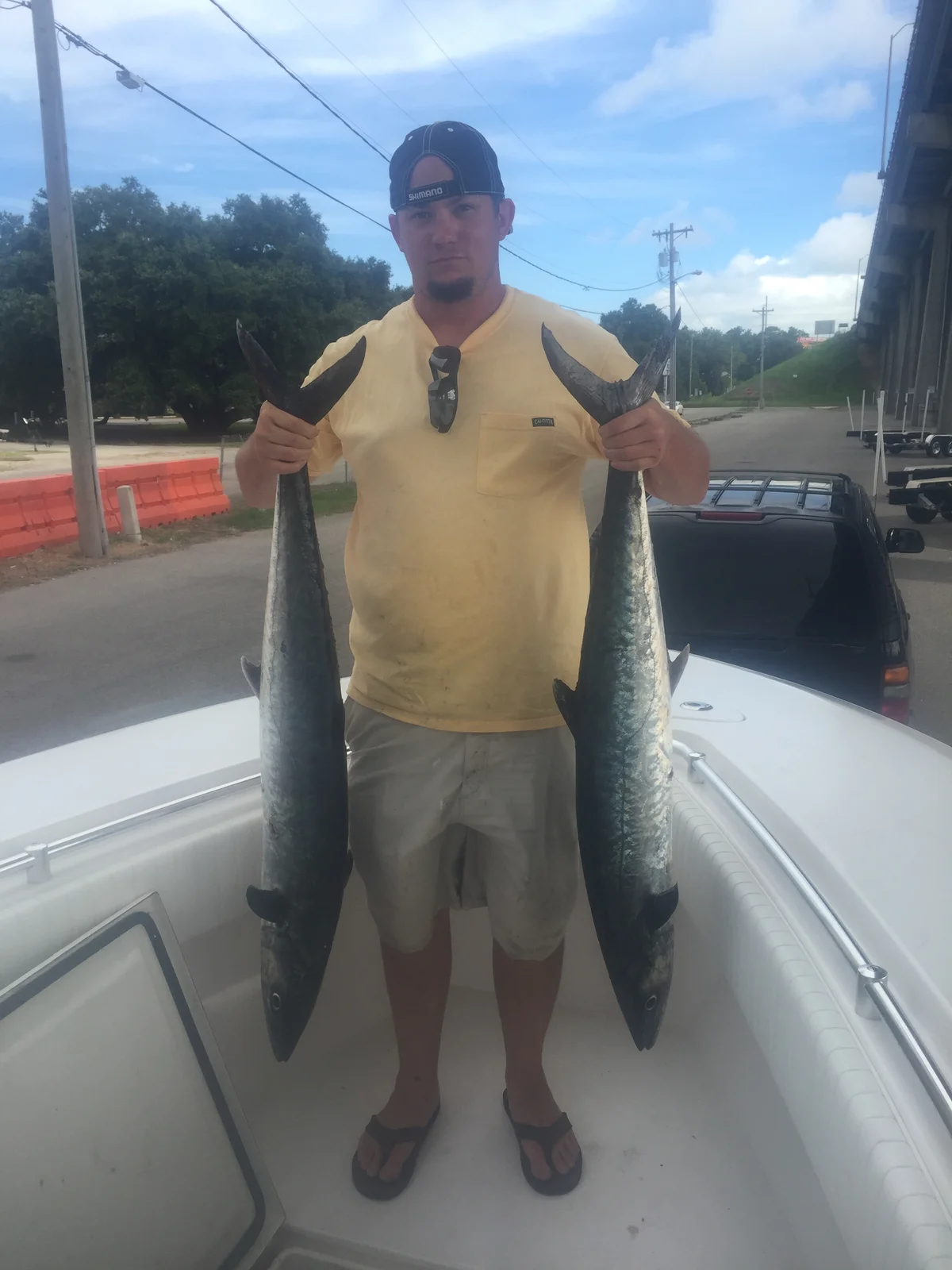
King mackerel fishing comes down to one problem the reel guide doesn’t solve for you: a smoker king eats the back half of a bait first as often as not, and if your rig doesn’t have a hook back there, you feel a thump and reel back nothing but a head. Everything about a proper king rig exists to solve that one problem, whether you’re running dead bait or live.
The stinger rig: why every king bait needs a trailing treble
A king mackerel rig is built around two hooks connected by wire: a nose hook that holds the bait, and a trailing treble hook — usually a #4 to #6, riding free or lightly pinned along the bait’s flank near the tail. Kings are notorious short-strikers, hitting a bait broadside or from behind and coming away with just the tail section if that’s all there is to bite. The trailing treble is there for exactly that bite. You lose a lot fewer “almost” fish once there’s a hook wherever the fish actually hits.
Wire matters as much as the hooks. Light, uncoated or camo wire in the 40–60 lb range gives you the abrasion resistance a king’s mouth full of sharp teeth demands without stiffening the bait’s action enough to look unnatural. A pre-made rig takes the guesswork out of this — I run the Sea Striker K1S-1T Carolina Live Bait King Rig, a slow-troll rig built with a 2/0 live-bait nose hook and a 4X strong #4 treble on 60 lb wire, from a brand that’s been building southeast tackle for 50 years. At under $10 it’s cheap enough to keep several rigged and ready, which matters — wire rigs take a beating from teeth and saltwater and are a consumable, not a keep-forever piece of tackle. Buy a handful, not one.
Dead bait: rigging to “smoke” across the top
Dead-bait king fishing means cigar minnows, menhaden, or ribbonfish rigged nose-hook-forward with the trailing treble worked into the flank, then either slow-trolled or skipped right on the surface so the bait skitters and smokes across the top — the wake and commotion is as much the trigger as the bait itself. Ribbonfish in particular needs a long, sinuous rig with the treble well back toward the tail, since its whole appeal as a bait is the snake-like swimming action a king can’t resist; cigar minnows and menhaden ride a shorter, stiffer rig and work better trolled just under the surface than skipped on top.
Troll dead bait slow — 2 to 4 knots is the range that keeps a rigged bait looking alive instead of washed out and spinning. Watch your bait every few minutes; a dead bait that’s started spinning is doing more harm than good and needs to come in and get re-rigged or refreshed.
Live bait: rigging to look like nothing happened
Live menhaden (pogies), blue runners, and cigar minnows are the gold standard live baits, and the rigging goal is the opposite of dead bait: disturb the fish as little as possible. Nose-hook through the bottom lip and out a nostril, or lightly through the collar just behind the head, so the bait can still swim naturally on the trailing treble riding free along its flank. A lively, undamaged bait swimming naturally under a spread is what separates a good live-bait king day from a slow one — handle them gently, keep the bait well aerated, and re-bait the second one looks tired or torn up.
Live bait gets fished one of two ways: slow-trolled at a bare crawl (barely faster than idle — you want the bait swimming under its own power, not being dragged) or fished under a balloon or kite to keep it pinned near the surface without any trolling speed dragging on it at all. Kite fishing in particular keeps a bait swimming naturally right at the surface, which is exactly where a lot of the biggest smoker kings feed.
Whichever way you fish it, drag matters more than almost anything else in king fishing — set it too heavy and a hard-charging king pops 20 lb leader on the strike before you’ve even picked up the rod. If you haven’t settled on a reel yet, the king mackerel tournament reel guide covers exactly what to look for in a drag system built for this.
Where to put the bait
Kings stack up around near-shore structure, reefs, and bait schools — pogey schools especially, since that’s often exactly what a smoker king is already eating. Slow-trolling live bait around and through a big school of menhaden, rather than off to the side of it, puts your bait in the same water the fish are already working.
Bottom line
Two baits, two totally different jobs for the same trailing treble: dead bait gets skipped and worked to draw a reaction strike on the smoke it kicks up, live bait gets rigged as gently as possible and slow-trolled or kited to look like nothing’s wrong at all. Keep a handful of rigs pre-tied in the box, keep your drag honest, and put the bait where the bait schools already are.
Land a smoker and want a number before it hits the box, use the king mackerel weight calculator — fork length and girth get you a solid estimate without a scale on board.
This article may contain affiliate links. If you buy through them, we may earn a small commission at no extra cost to you. Learn more.