Building a Ballyhoo Rigging Kit: What Actually Belongs in the Box
Every boat that trolls ballyhoo ends up with some version of a rigging kit, but most of them start as a junk drawer — a handful of needles rattling around with hooks, a spool of wire with no leader on it, floss that’s half unraveled. The difference between that and a kit you can actually work out of on a rocking boat at 5:30 a.m. is organization, not gear. Here’s everything that belongs in it, and why.
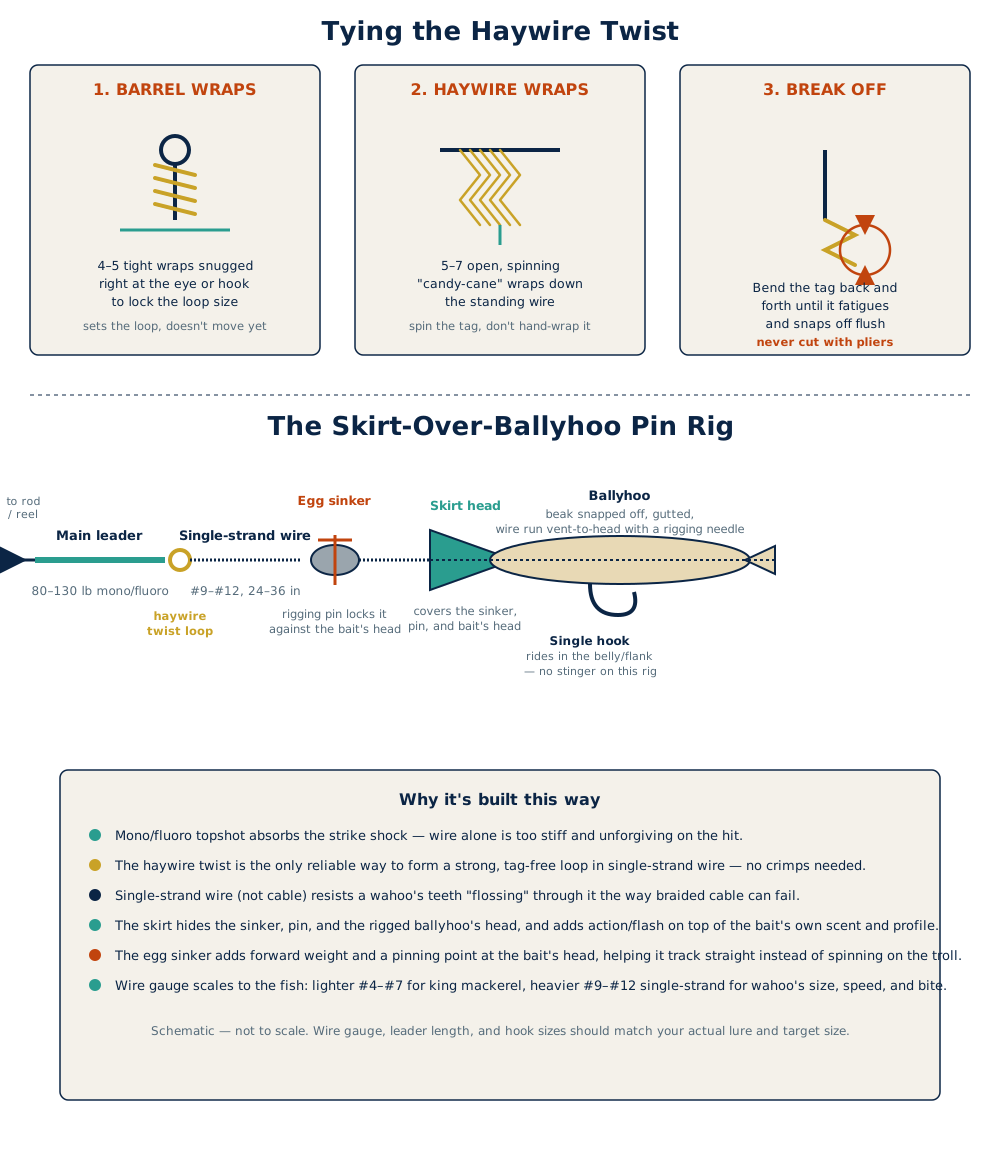
This pairs with the haywire twist and skirt-over-ballyhoo pin rig guide if you want the actual rigging steps — this article is about building the kit you rig out of, not tying the rig itself.
Why a dedicated kit matters
Rigging ballyhoo at the dock the night before a trip is a different job than rigging on a pitching deck after the fish showed up on bait pods at first light. A kit that’s organized — everything in its place, nothing you have to hunt for — is the difference between having six baits ready before the sun’s up and still be rigging while your buddy’s spread is already out. It also means you’re not raiding your hook box or your leader spool mid-trip and leaving the rest of your tackle disorganized for the next thing you need to rig.
What goes in the kit
| Item | Purpose | Notes |
|---|---|---|
| Rigging needles (ballyhoo/bait needle, curved and straight) | Running wire or mono through the bait | Carry at least two sizes — a standard needle for most ballyhoo, a heavier one for horse baits or double-hook rigs |
| Rigging wire (single-strand, assorted gauge) | Building leaders and pin rigs | Keep separate spools by gauge so you’re not guessing which one you grabbed |
| Waxed rigging floss or copper wire | Wrapping the bait’s bill and cinching it to the leader | Floss is the traditional choice; some riggers prefer fine copper wire for a tighter, more permanent wrap |
| Egg sinkers, various weights | Weighting pin rigs to keep baits tracking straight | Sort by weight in a small compartment box so you’re not fishing through a bag of loose sinkers |
| Rigging pins (pre-bent) | Locking egg sinkers against the bait’s head | Buy pre-bent or bend your own from stiff wire — either works, pre-bent just saves time |
| Assorted hooks (single and treble/stinger) | The business end of the rig | Match hook size to bait size and target species — a hook too big kills a small ballyhoo’s swimming action |
| Chin weights / lure heads | Alternative to pin rigs for pre-packaged skirt combos | Optional if you build all your own pin rigs, but handy for quick rigging |
| Crimps and a crimping tool | Cable (braided wire) connections | Only needed if you run cable leader in addition to single-strand — see below |
| Haywire twist tool | Forming loops in single-strand wire | Makes the barrel-wrap step of the haywire twist far easier to control than bare pliers |
| Sharp scissors or line clippers | Trimming floss, wire tag ends, leader | Keep a dedicated pair in the kit — don’t rely on finding one elsewhere on the boat |
| Bait-prep tools (scaler, small knife) | Removing gills/guts, breaking the beak | A dull knife tears the belly instead of cleaning it |
| Small cutting board or bait board | Working surface | Doesn’t need to be fancy, just stable on a wet deck |
| Vinyl or nitrile gloves | Keeping hands from smelling like bait all day, and grip on a slick bait | Also helps when handling brined or salted ballyhoo |
Storage: keep it modular
The biggest upgrade most riggers can make isn’t buying better gear, it’s organizing what they already have. A multi-compartment tackle box or a soft-sided rigging bag with clear pouches lets you separate needles, hooks, sinkers, and wire so you can grab exactly what you need without dumping everything out on a moving deck. A few things that make a real difference:
- Separate wire by gauge and type. Mixing single-strand gauges in one spool bag means you’re guessing under pressure. Label each spool or bag.
- Keep hooks in a divided box, not a single bag. A tangle of hooks at 5 a.m. costs you time and blood.
- Store rigged baits separately from raw materials. If you pre-rig the night before, a bait tray or a shallow cooler tray with ice keeps finished rigs ready to deploy without re-handling them.
- Keep a small notebook or waterproof card with your go-to gauge and hook combos for different species — it’s easy to forget which wire gauge you settled on for kings versus wahoo when you’re rigging half-asleep.
Pre-rigging versus rigging on the water
Most boats that fish ballyhoo seriously pre-rig a batch the night before a trip — brine or salt the baits, rig a dozen or two, and store them ready to pull straight from the cooler. This is worth doing for two reasons: it’s a lot easier to rig carefully at a bench under good light than on a rocking boat, and it means you’re fishing within minutes of getting to the grounds instead of rigging baits while the fleet works the spot around you.
That said, the kit still needs to go on the boat. Baits get bitten off, rigs fail, and sometimes the bite calls for a size or hook style you didn’t pre-rig. A stocked kit on board means you can build a replacement bait in a few minutes instead of running back in.
Brining and bait prep
A properly brined ballyhoo holds up to being trolled far longer than one straight out of the freezer bag — bait shops and offshore crews all have their own brine recipes, but the general goal is the same: toughen the bait’s flesh so it doesn’t wash out or tear off the hook after a few strikes or a long troll. This is worth its own routine separate from the rigging kit itself, but it belongs in the same pre-trip prep session.
What this kit feeds into
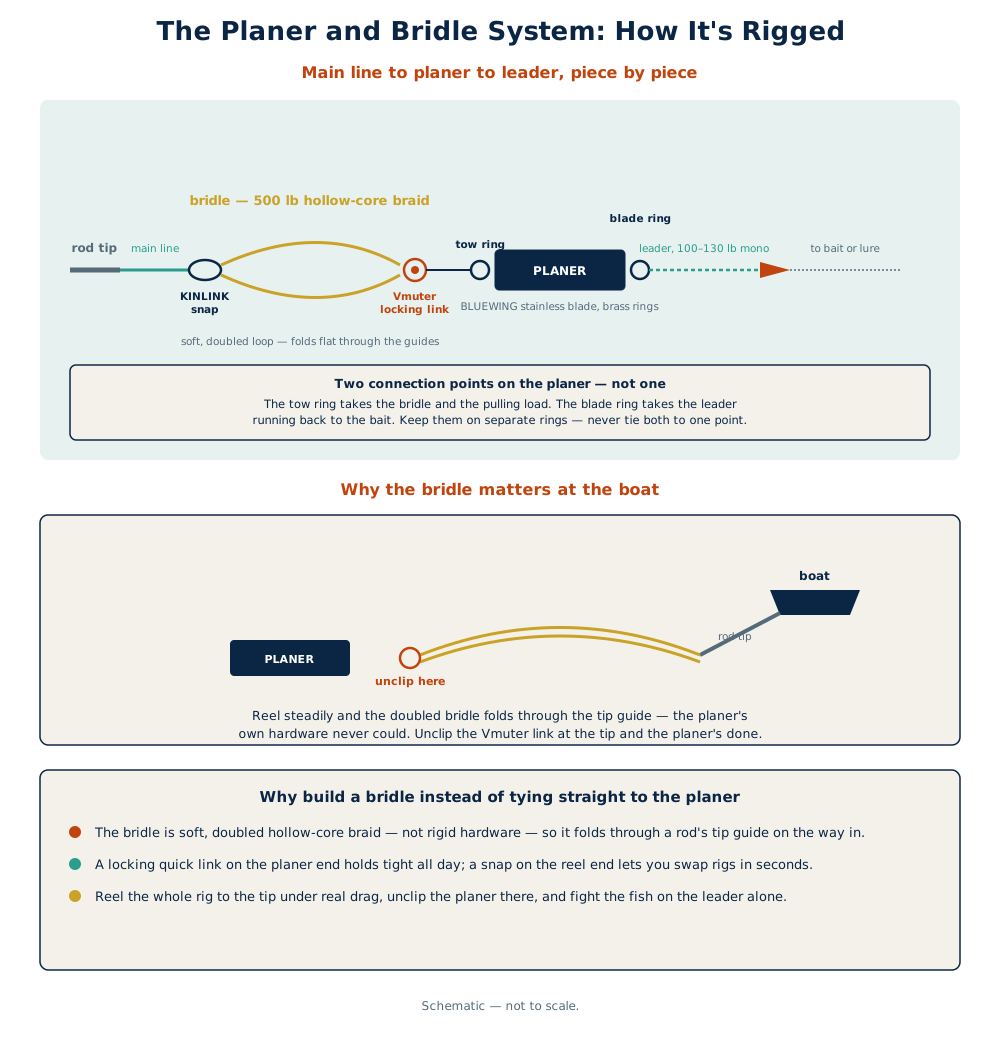
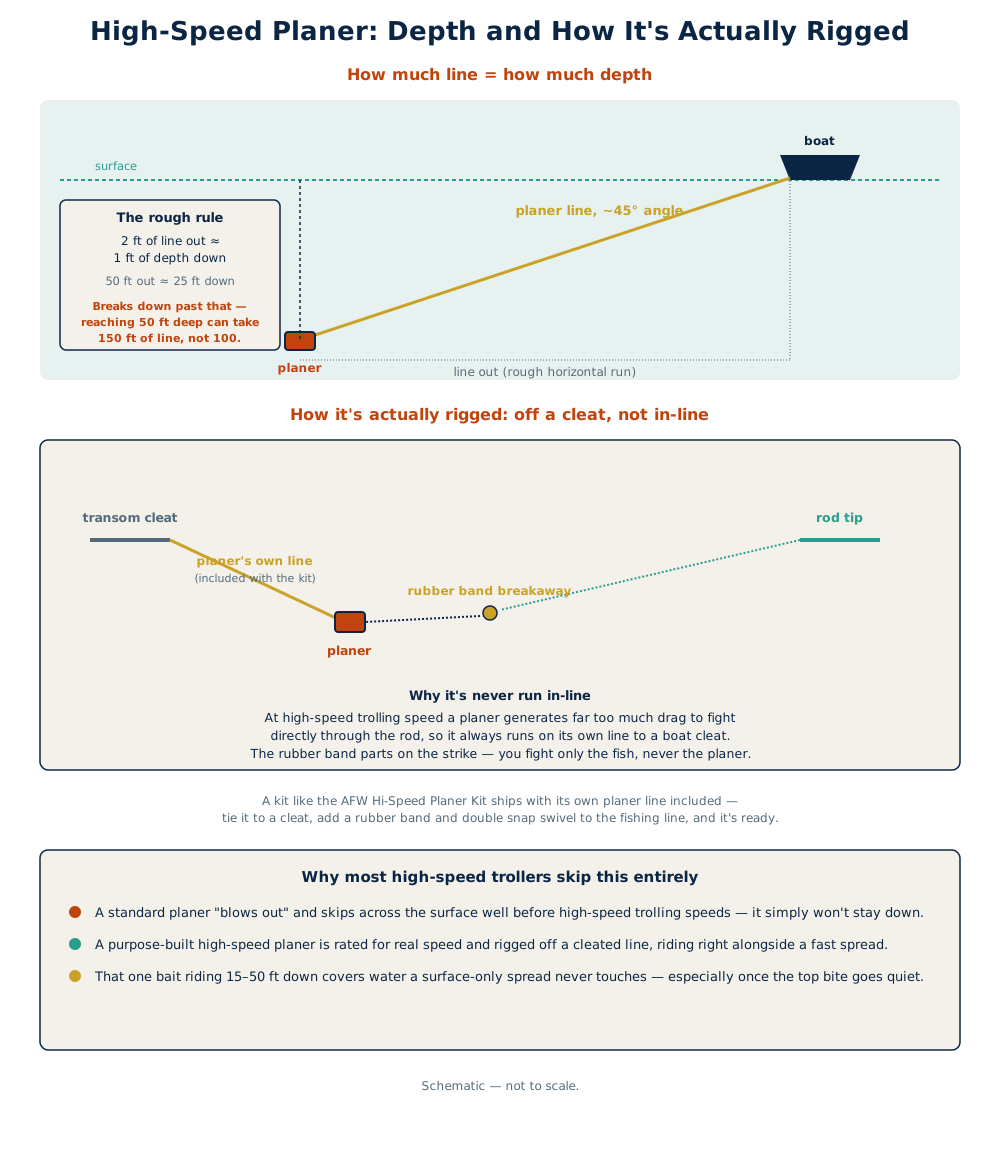
Once the kit is built and the baits are rigged, they’re going into the same spread covered elsewhere on this site — the standard trolling spread, the mid-Atlantic tuna spread, or pulled behind a planer or off the outriggers depending on the target. The kit doesn’t change species to species — the hook sizes, wire gauges, and weights inside it do.
Bottom line
A ballyhoo rigging kit isn’t complicated — needles, wire, floss, sinkers, pins, hooks, and a way to keep it all separated so you can find what you need without digging. Build it once, keep it stocked and organized, and rigging baits stops being the bottleneck before a trip.
This article may contain affiliate links. If you buy through them, we may earn a small commission at no extra cost to you. Learn more.