Mid-Atlantic and Carolinas Offshore Bite Calendar, Season by Season
Offshore fishing this stretch of coast isn’t one season — it’s a rotation, and knowing where you are in it matters as much as knowing where the fish are. This is the general rhythm we plan around, from the Carolinas up through the mid-Atlantic. Water temperatures shift a little earlier or later year to year, so treat this as the pattern, not a calendar with hard dates — and always check current regulations before you target anything with a closed season or a quota, since those change independently of the fish showing up.
Winter — the slow grind, and the one that isn’t
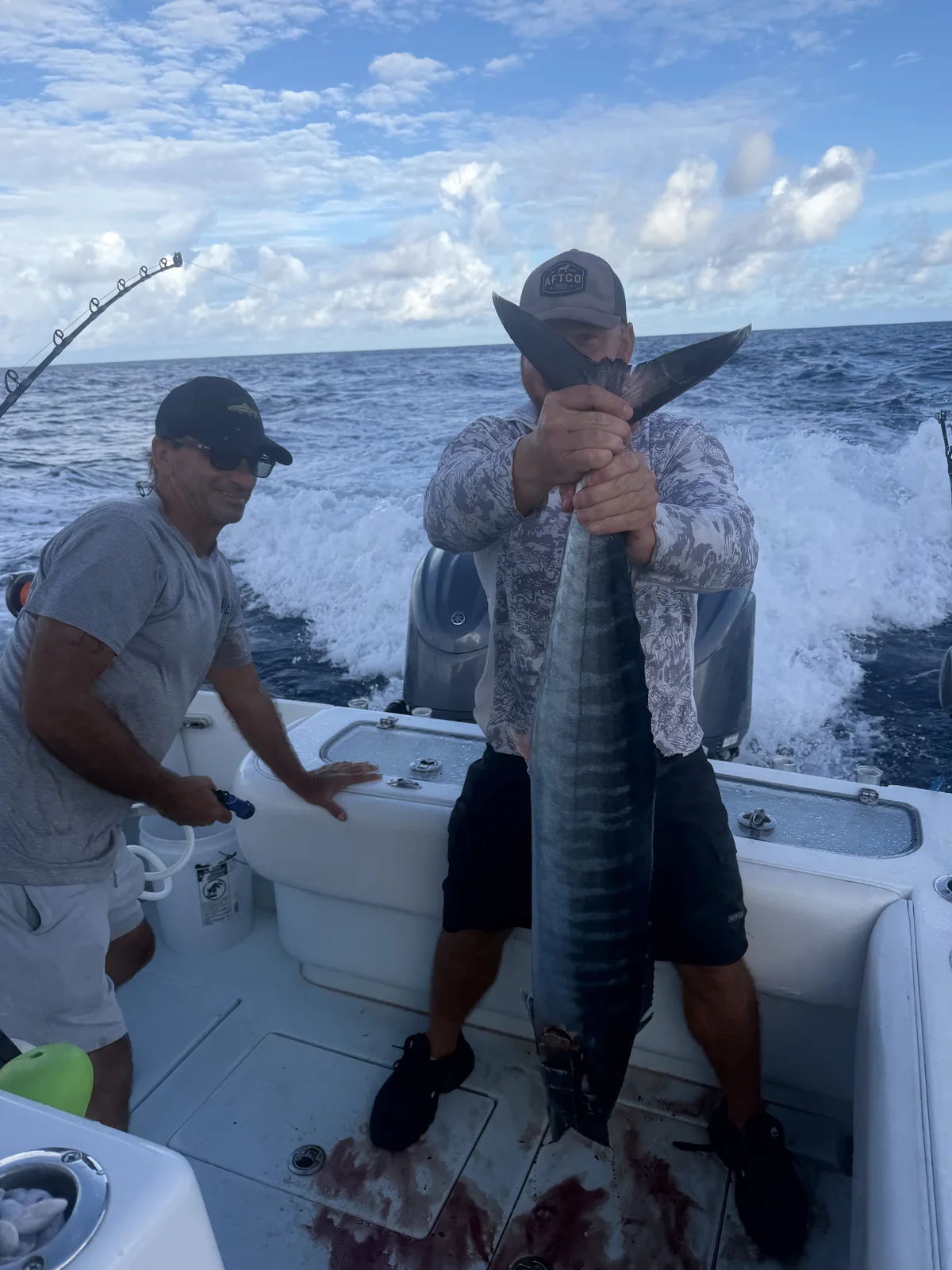
Offshore trolling goes quiet as water temps drop, but it’s not a dead season. Wahoo still bite in the Carolinas through the winter — our high-speed wahoo trolling guide covers a program that picks away at them nearly year-round, just at a lower frequency than the fall peak. Bottom fishing keeps going too, since deep structure species are less tied to surface temperature: black sea bass, and deep-drop tilefish and grouper on calmer winter weather windows. This is also boat-project season — engine service, electronics upgrades, and rigging ahead of spring.
Spring — the cobia run and the water starting to turn
Spring means one thing first in South Carolina and Georgia waters: cobia. The spring cobia migration through spots like Port Royal Sound and the Broad River is a genuine event, drawing boats specifically for that run before cobia move on. Alongside it, king mackerel start showing up in numbers as water warms, and black sea bass fishing stays strong on the bottom — see the black sea bass rig guide for the setups that produce. Early-season wahoo picks up again as the water climbs out of winter temps, and it’s worth starting to watch SST charts (see our guide to reading temperature breaks) for the first real warm-water push.
Summer — bottom fishing on fire, trolling slower but still there
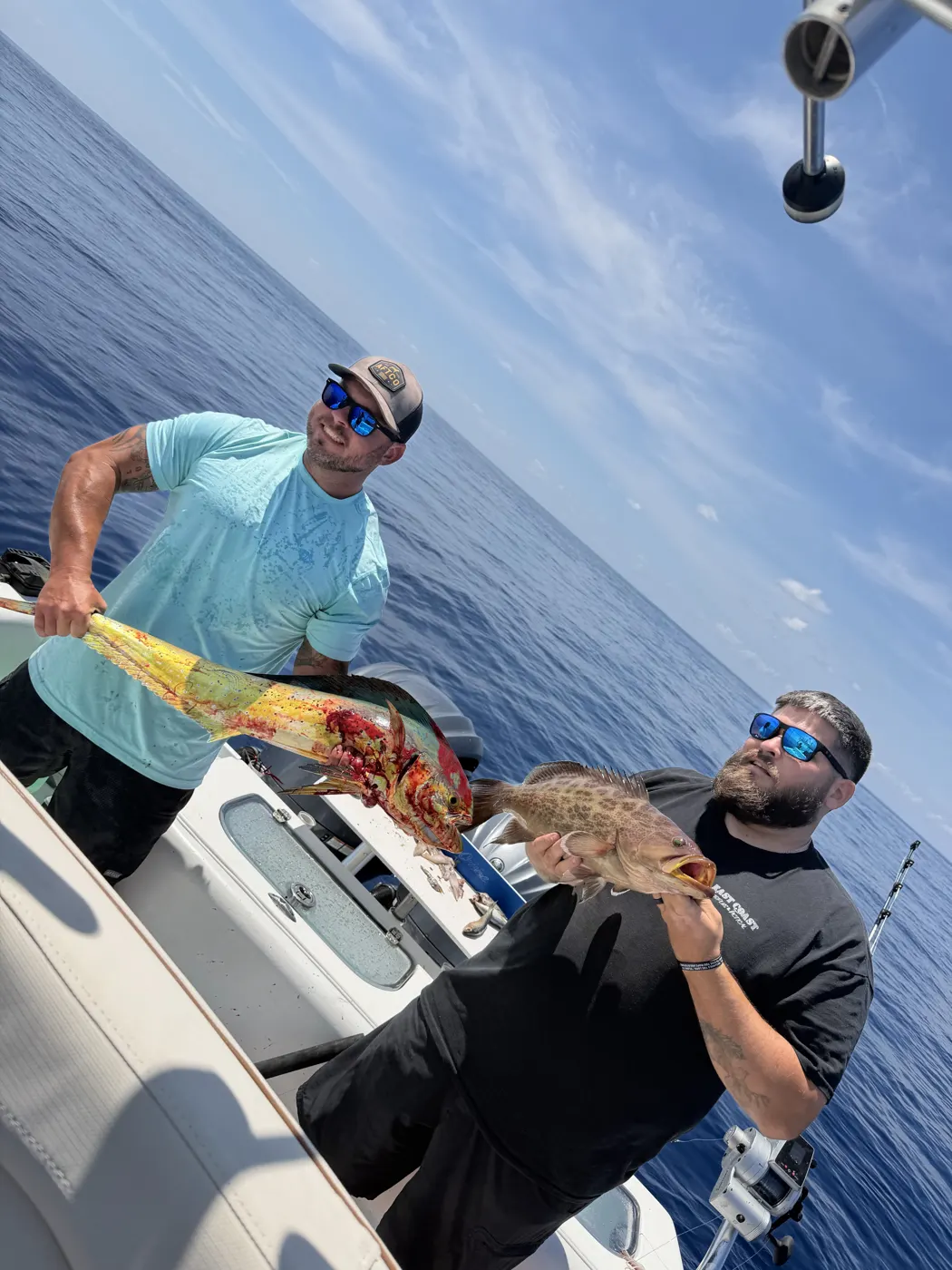
By summer, bottom fishing is usually at its best — cobia numbers build, grouper are plentiful, and it’s the season our own July report covers in detail, including where things stand on red snapper regulations, which shift year to year and are worth checking directly rather than assuming last season’s rules carry over. Offshore trolling gets tougher as surface water heats up and spreads the fish out, but mahi, wahoo, and tuna are still around — they’re just harder to pin down without working temperature breaks and current edges instead of blind-trolling. Summer is also prime season for tournaments built around king mackerel — the tournament reel guide covers the gear that program runs on.
Fall — the peak, on almost every front
If there’s one season to build a trip around, it’s fall. Wahoo hit their real peak in the Carolinas from late summer through fall, the same window covered in the planer fishing and trolling spread articles. Further up the coast, mid-Atlantic canyon trips hit their stride as yellowfin and other tuna push into range. And up on the Outer Banks, the fall false albacore run is its own well-known event — dense schools of hard-fighting albies that draw anglers specifically for that bite, usually running from early fall into November depending on the year. Mahi are still around early in the season before water cools. It’s the busiest, most target-rich stretch of the calendar, and the one worth planning a trip around if you only get to pick one.
Bottom line
The pattern repeats every year even as the exact timing shifts a week or two either way: winter is the grind (with wahoo and bottom fishing keeping things alive), spring is the cobia and king mackerel build, summer is bottom-fishing season with trolling requiring more work, and fall is the peak across trolling, canyon tuna, and the albie run. Watch water temperature more than the calendar date, and check current regulations every season — they move independently of the fish.
This article may contain affiliate links. If you buy through them, we may earn a small commission at no extra cost to you. Learn more.