My Boat: A 1999 Contender 31 Open, Completely Rebuilt — Full Tour
Every gear opinion on this site gets tested on the same platform, so it’s time you met her: a 1999 Contender 31 Open, completely rebuilt in 2016. This is the full tour — what’s on her, why it’s rigged the way it is, and the case for why an old hull rebuilt right is the best value in offshore fishing.
Why a 25-year-old boat
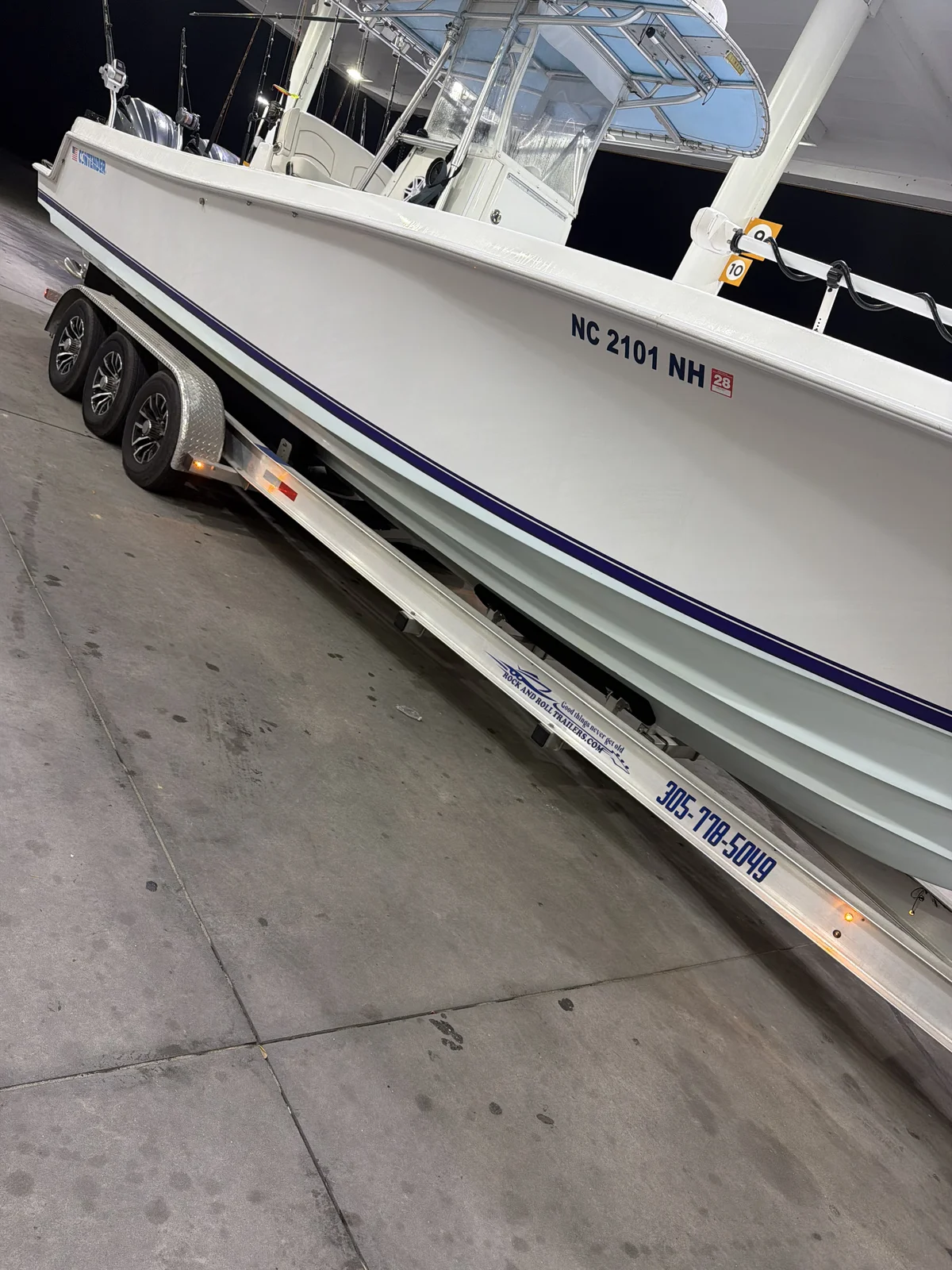
The 31 Open is one of the hulls that built Contender’s reputation — a deep-V that runs offshore the way modern boats twice the price wish they did. Mine spent part of her earlier life as a tender (she still wears the towing eye to prove it) before the 2016 rebuild took her down to the bones and back: bottom refinished in ice blue gelcoat, new forward grab rail, and a re-rig that touched essentially every system on board. The math is the argument: a rebuilt proven hull with modern power and electronics, for a fraction of what a new 31-footer costs. The payment you don’t have buys a lot of fuel and tackle.
Power
Twin 2022 Yamaha F300s, fly-by-wire. Modern digital controls on a classic hull is a combination I’d recommend to anyone doing a repower — smooth shifts, effortless throttle work when you’re backing on a fish, and the reliability that’s made the F300 the default offshore outboard. Steering is hydraulic with a SeaStar power-assist pump, which matters more than people think on a heavy deep-V at trolling speed all day.
Fuel is the 31 Open’s superpower: 300 gallons between a 130-gallon center tank and 85-gallon saddles. That’s canyon range with a comfortable reserve, and it’s why this hull can fish weather windows other trailer boats can’t chase.
Real-world performance, loaded like a fishing boat
Performance numbers on a stripped boat with a light load are marketing. These were run the way the boat actually fishes:
| Test conditions | |
|---|---|
| Seas | 1–2 ft forecast, roughly 1 ft of chop |
| Crew | 3 people |
| Load | 3 loaded ice chests, 2 anchors, full gear |
| Fuel | All three tanks full — 300 gallons |
| Livewell | Forward well full — 45 gallons of water |
That’s well over a ton of fuel and water alone, and she still ran:
- Comfortable cruise at 42 mph, with a fast cruise at 47 mph when the ride allows
- 63 mph top end, turning the full 6,000 RPM trimmed out — the F300s reaching the top of their range with that load says everything about how well this hull and power match
A 27-year-old hull, loaded for a real trip, running 60+. That’s why you rebuild a Contender.
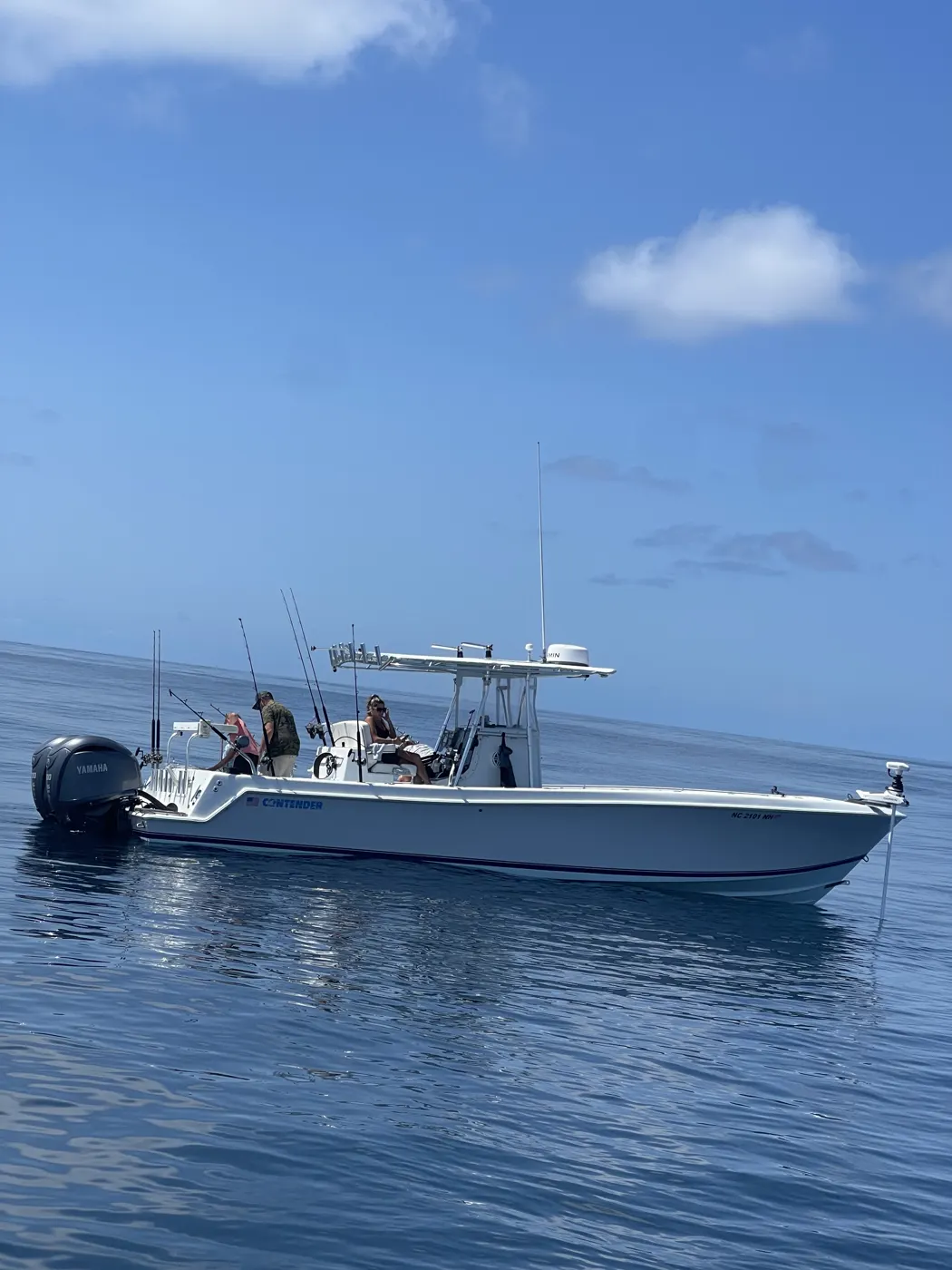
*Underway on a slick-calm day.*The helm
The brains are covered in detail in the electronics guide and the Force Kraken review, but the summary: twin Garmin 1243xsv MFDs running CMOR mapping, a Garmin GMR 18 HD3 radome, a Garmin Reactor 40 autopilot — recently upgraded with a satellite compass for interference-free heading — and the Force Kraken trolling motor on the bow, all integrated on one network. A Starlink Mini keeps full internet offshore — weather, radar loops, and sea surface temperature charts in real time, 60 miles out. For an IT guy, that last one changed trip planning more than any single piece of fishing gear.
The transducer array
This is the part of the boat I get asked about most, because it’s the part most boats under-build. She runs three thru-hulls:
| Transducer | Power | Frequencies | Job |
|---|---|---|---|
| Garmin GT51M-TH (stainless thru-hull) | 500 W ClearVü/SideVü, 600 W mid-CHIRP | 260/455 kHz + 80–160 kHz | Structure imaging and the mid-water column |
| Garmin B175L | 1 kW | Low CHIRP, 40–60 kHz | Deep water — the tilefish and swordfish grounds |
| Furuno B160 | 1 kW | — | The second opinion, on its own brain |
The philosophy is simple: the transducer is the ceiling of what your electronics can do, so that’s where the money went. Low-frequency 1kW CHIRP for the deep stuff, imaging for the wrecks, and redundancy — because a boat 60 miles out with one dead transducer is a boat fishing blind.
Rigged to fish
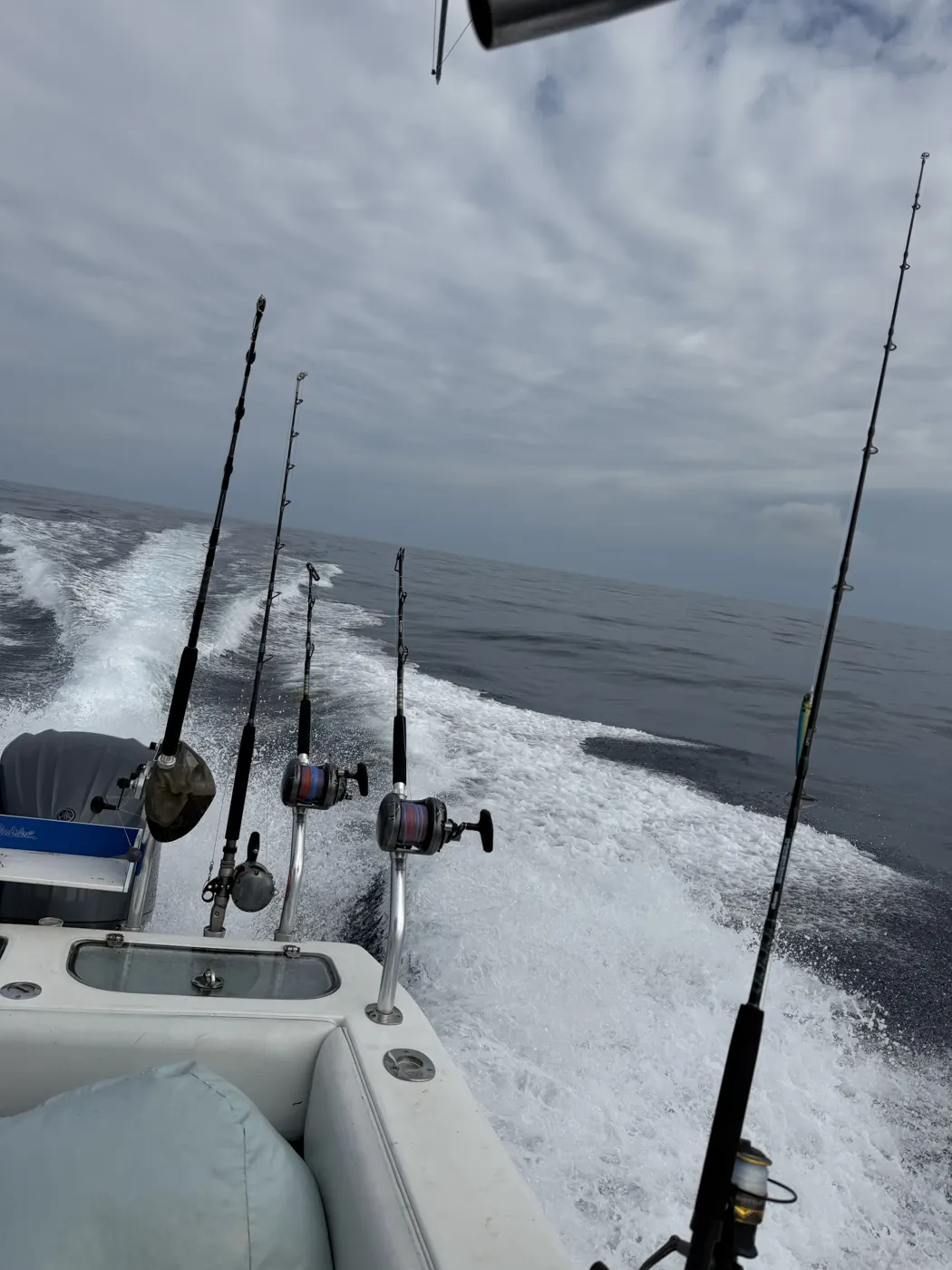
- 49 rod holders, 23 of them in the gunnels. That number sounds absurd until you run a nine-line spread with a full bottom program and kite gear aboard.
- Rupp 18-foot carbon fiber outriggers and a Taco center rigger for the trolling program, each running a shock cord tag line off the release clip for the high-speed wahoo program.
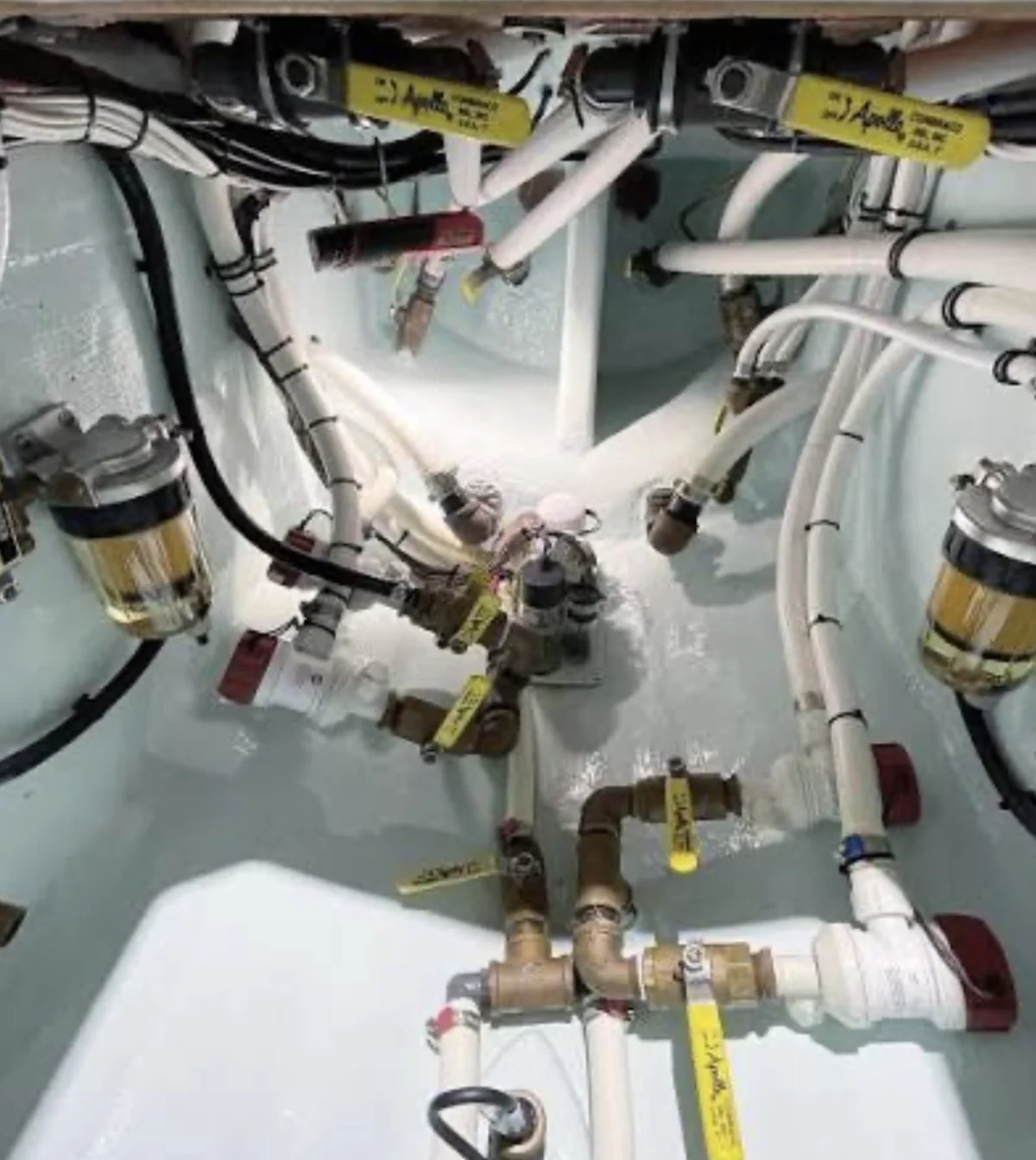
- Three livewells — two aft, plus a 50-gallon round above-deck well forward, fed by dual 2,000 GPH pumps in a sea chest. Round wells and serious flow keep baits like they came out of the ocean, which is the entire live-bait game.
- Removable Birdsall rigging station over the center livewell — rigging leaders at a proper station instead of a cooler lid is a quality-of-life upgrade you don’t undo.
- Yeti 250 coffin box for the catch, plus 25-gallon freshwater and raw-water washdowns for the cleanup.
- Stainless Gemlux compression latches throughout — small detail, but rattling hatches on a rough ride get old fast.
The cockpit doing what it was built for:
The electrical system
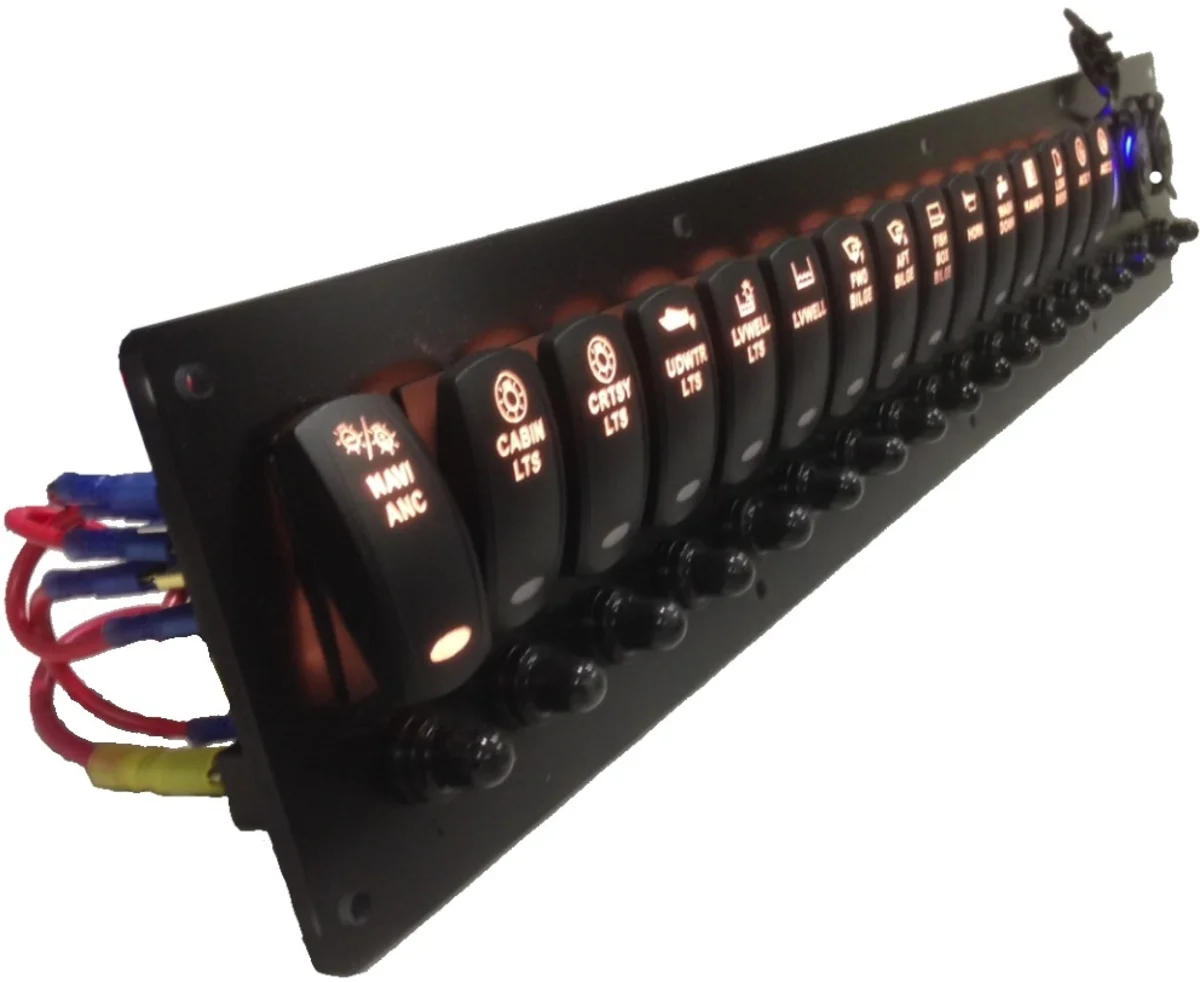
The part of the boat where my day job shows. Four Group 31 AGM batteries charged by a Mastervolt charger, and a deliberate outlet plan: a Hubbell 30-amp receptacle midship for deep-dropping (ready for corded electric reels, though the battery-powered Fathom Electric doesn’t even need it), dual 15-amp outlets midship, a downrigger/kite plug starboard aft, and pre-wiring for kite reels forward and port aft. Add the anchor-locker LiFePO4 that feeds the Kraken, and every electric fishing tool on this boat has a dedicated, protected circuit. Wire it once, wire it right, and never troubleshoot a dead outlet on a bite. The bilge pump circuits got the same treatment — sized and switched the way the bilge pump buying guide lays out, not an afterthought bolted onto whatever wire happened to be closest. The switch panel itself is tinned wire and adhesive-lined heat shrink throughout, built the way the switch panel build/repair guide covers — not automotive-grade parts pressed into marine duty.
Lights and creature comforts
Lumitec Capri spreader lights in white/blue with side lights for night fishing and cleanup, two LED cockpit lights, and Lumitec SeaBlaze 2 underwater lights — the blue draws bait at night, and the white makes the 2 a.m. washdown civilized. New T-top canvas this spring and a three-sided enclosure with weather wings, which turns shoulder-season runs from punishment into fishing.
And because a 31 Open is still supposed to be fun: a Fusion head unit pushing an all-JL Audio system — four 10-inch subs on 1,000-watt amps, six 8.8s and two 7.7s on another 1,400 watts between them. The long ride home sounds better than it has any right to.
The honest assessment
The takeaway
A rebuilt classic hull, modern power, an electronics package built around the transducers instead of the screens, and rigging decisions made by someone who fishes every week. Every review on this site — the reels, the electronics, the Kraken — earned its opinion on this deck.
This article may contain affiliate links. If you buy through them, we may earn a small commission at no extra cost to you. Learn more.