Garmin ECHOMAP Compared: UHD2 vs. Ultra 2
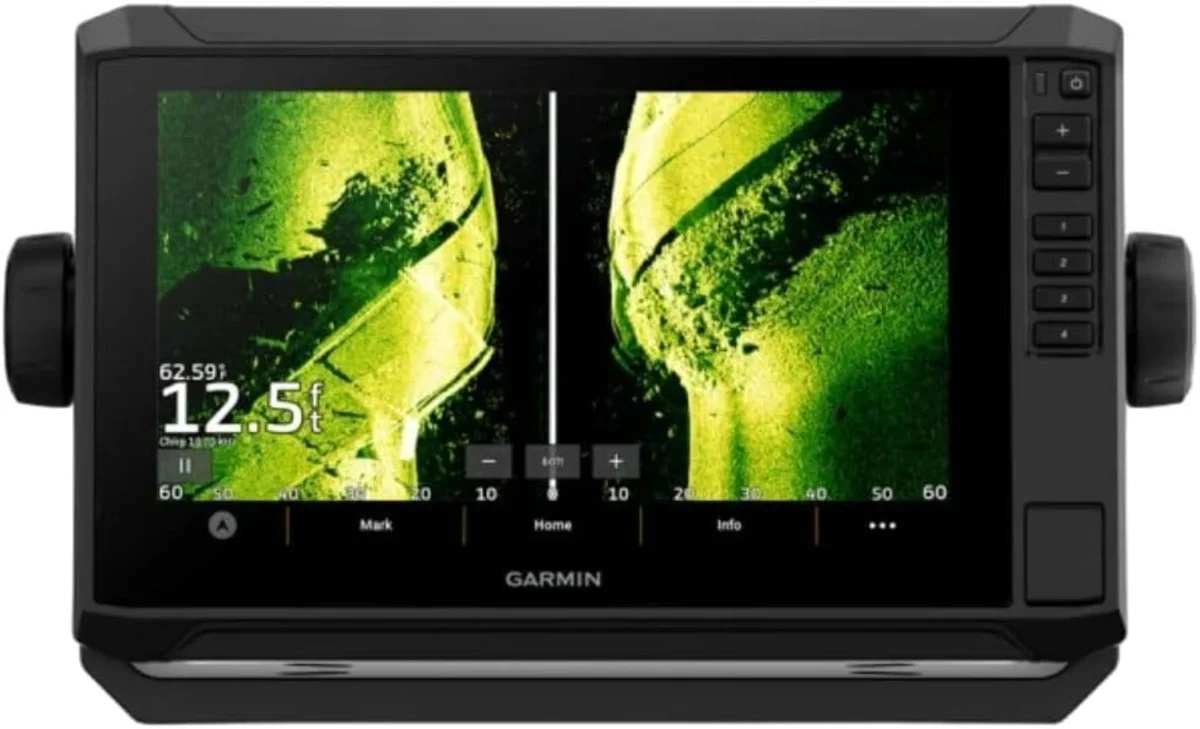
ECHOMAP is Garmin’s middle tier — sunlight-readable touchscreens with keyed-assist backup, real chartplotting, and sonar processing a step above the entry-level STRIKER line, without GPSMAP’s networking depth or price tag. For where ECHOMAP sits against Garmin’s other two families, start with the lineup overview.
ECHOMAP UHD2 — the value pick
Screens run 6 to 9 inches, and a full setup with transducer typically lands between $700 and $1,800 depending on size and sonar package. It’s a touchscreen with keyed-assist controls (so you’re not purely dependent on touch in spray), and the sonar performance genuinely punches above its price point — reviewers consistently note it as the standout feature of the line. The real limitation: no radar integration, so if you want radar on the same network, UHD2 isn’t the unit to build around.
ECHOMAP Ultra 2 — the step up
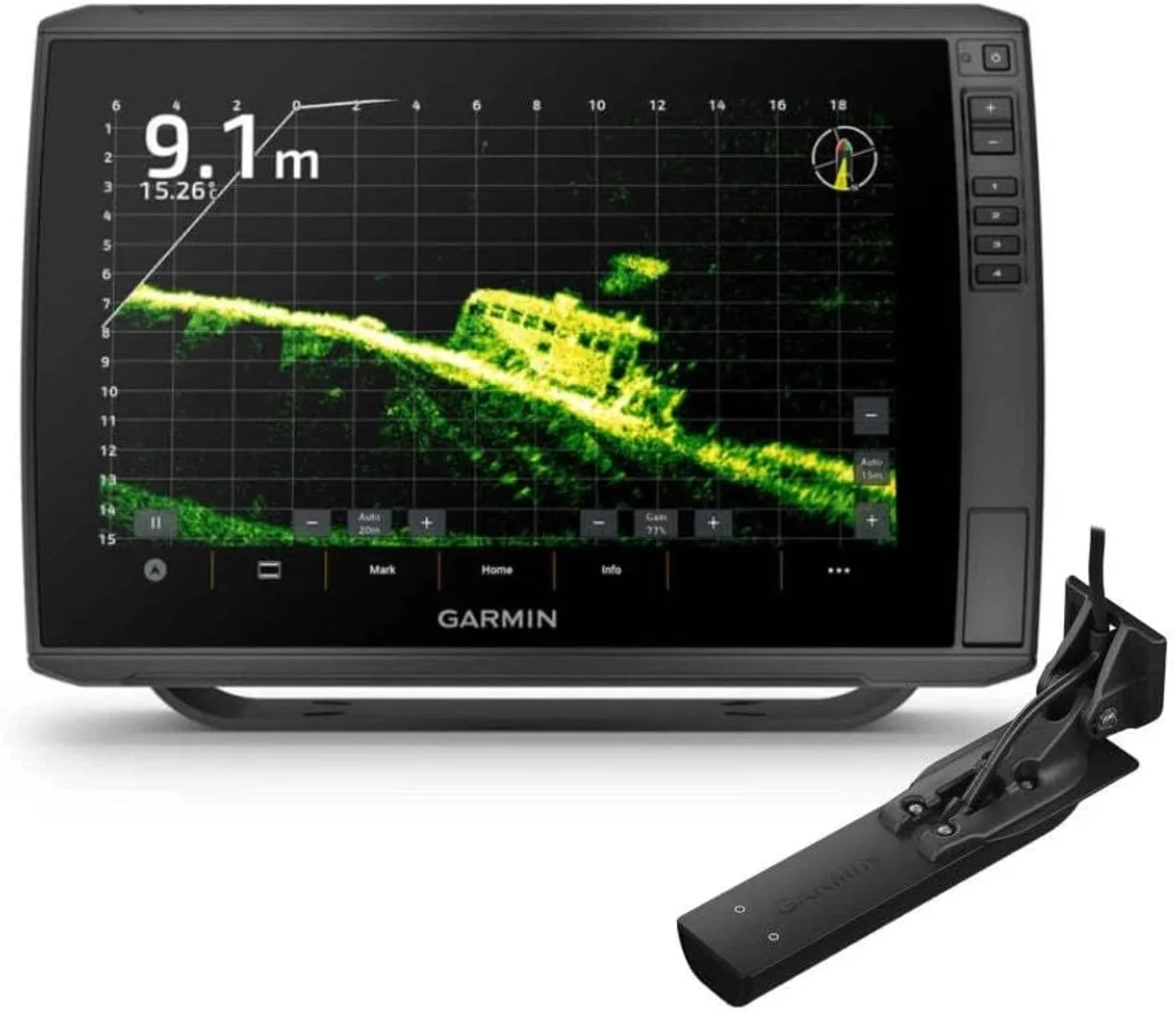
Available in 10 and 12-inch sizes, with full setups running roughly $1,900 to $4,800. The jump over UHD2 isn’t just screen size — Ultra 2 runs higher sonar output (600 watts versus 500 watts on UHD2), better GPS position accuracy, and faster 10Hz position updates, plus broader built-in mapping coverage. It’s still not GPSMAP-level NMEA 2000 networking, but for a boat that just needs a bigger, sharper, more accurate chartplotter without jumping families, Ultra 2 is the honest upgrade path from UHD2.
What actually sets UHD2 and Ultra 2 apart: networking, transducers, and inputs
The two ECHOMAP tiers share the same networking ceiling — the real gap is sonar power and positioning accuracy, not what the unit can plug into.
| ECHOMAP UHD2 | ECHOMAP Ultra 2 | |
|---|---|---|
| Networking | NMEA 2000 only — no NMEA 0183 port | NMEA 2000 only — no NMEA 0183 port |
| Sonar module port (Panoptix LiveScope, etc.) | Supported — port is sonar-module-specific | Supported — same restriction |
| Radar | Not supported | Not supported |
| Transducer | Model-specific bundled GT-series unit (e.g., GT56UHD-TM), ~500W sonar power | Higher-power bundled GT-series transducer, ~600W sonar power, swappable within the compatible connector family |
| Wi-Fi / app pairing | Built-in, for unit-to-unit sharing and ActiveCaptain | Built-in, same |
The practical read: if you’re choosing between UHD2 and Ultra 2 for what each can network with, there’s no difference — same NMEA 2000-only backbone, same sonar-locked accessory port, same lack of radar support. The real gap is under the hood: Ultra 2 pushes more sonar power and faster, more accurate GPS positioning, which shows up as cleaner bottom returns in deeper water and tighter track lines, not as a longer feature list. If networking depth is what you’re after — radar, NMEA 0183 legacy gear, unrestricted accessory ports — that’s not a reason to pick Ultra 2 over UHD2, it’s a reason to look at GPSMAP instead. Either way, the transducer buying guide covers how to match power and frequency to your actual fishing depths.
Which one fits your boat
A smaller center console, bay boat, or bass boat where budget matters and you still want real sonar and mapping: UHD2 is the practical pick, especially in the 7-9 inch sizes. A nearshore or inshore boat that wants a bigger, more accurate display and better sonar power without spending GPSMAP money: Ultra 2, in the 10 or 12-inch size your dash can fit. Either way, ECHOMAP is the family for boats that want a genuine chartplotter/sonar combo but don’t need radar, deep NMEA 2000 accessory networking, or trolling-motor integration — that’s what pushes a build into GPSMAP territory instead.
What you give up versus GPSMAP
No radar support on either ECHOMAP tier, and the NMEA 2000 networking is shallower — fine for a GPS/sonar/basic instrument setup, not built for the kind of full-helm integration that lets a Force Kraken trolling motor spot-lock from the chartplotter or a satellite compass feed a full autopilot. If that kind of ecosystem is the goal, that’s the case for spending the extra money on GPSMAP instead — see the general buying-guide fundamentals for how to think about that tradeoff before you spend. For what NMEA 2000 actually does and how it differs from the Garmin Marine Network/BlueNet layer that GPSMAP adds, see the NMEA 2000 setup guide and the networking overview.
This article may contain affiliate links. If you buy through them, we may earn a small commission at no extra cost to you. Learn more.